





Explore HMH’s science of reading articles, resources, and research-backed insights all in one place. This curated collection brings together expert perspectives, classroom strategies, leadership guidance, and instructional best practices to support teachers, coaches, and school leaders at every stage of implementation.
Whether you’re looking for science of reading resources for teachers or ways to strengthen implementation across classrooms and districts, these resources help connect research to instruction so every student can become a confident, capable reader.
Science of reading resources and more
The articles below are organized into the following categories:
- Getting started with the science of reading
- Structured literacy
- Foundational reading skills
- Decoding and fluency
- Knowledge building, vocabulary, and comprehension
- Assessment and data-driven instruction
- Activities and instructional strategies
- Supporting diverse learners
- Customer stories
Getting started with the science of reading
Foundational research and instructional principles behind the science of reading.

Find out the answer to the question, “What is the science of reading?” Plus, explore science of reading strategies and resources.
Learn how educators can align literacy instruction with the science of reading to support effective, evidence-based teaching.

Get free, printable science of reading lesson plan templates to help you plan evidence-based instruction across grades K-5 and learn more about what makes a lesson science of reading–aligned.

HQIM don’t just support learning—they help shape the entire educational experience. Learn more about how both students and teachers can benefit from high-quality instructional materials.

Read more about five essential reading strategies for secondary students, including tips to enhance comprehension and help students become active readers.

These eight elements of reading and literacy instruction can serve as the foundation of an effective literacy program.

HMH's research team answers commonly asked questions about the science of reading to help educators apply its principles in their classrooms.
Structured literacy
Understanding structured literacy and its role in evidence-based reading instruction.

Get the answers to commonly asked questions like, "What is structured literacy and how can I implement the approach?"

Explore the 3 principles of structured literacy and how explicit, systematic, and data-driven instruction support reading development through the science of reading.

Discover the six essential components of Structured Literacy and why they matter for every classroom.

Understanding the distinctions between structured literacy vs. the science of reading can be crucial to ensuring that reading programs are designed to support students effectively.

The most productive literacy block schedules include various reading and writing activities and instruction to help build foundational skills.
Foundational reading skills
Core elements of phonological awareness, phonemic awareness, phonics, and other early literacy skills.

Phonics vs. phonological awareness—what’s the difference? This article breaks down what each skill involves and how to use both in the classroom.

Discover why research-based phonemic awareness interventions matter—and get strategies, sample intervention plans, and activities for K–12 students.

Explore how to teach phonological awareness skills through clear instruction and hands-on activities.

Learn more about phonics—the relationship between the sounds of language and the letters that represent those sounds.

The alphabetic principle is the foundation of phonics instruction. Learn more about the concept and discover some strategies for teaching it in the classroom.

Phonological and phonemic awareness are key aspects of emergent and beginning reading development and instruction. Read more to find out how the two terms connect to each other.

Learn about phonemic awareness and how it relates to phonological awareness.

One of the first skills developing readers need to master is phonological awareness. In this article, we will dig into what phonological awareness is and the importance of referencing it for reading instruction.

Learn about orthographic mapping, the cognitive process that we use to store and retrieve words by connecting their pronunciation, spelling, and meaning automatically.

Teaching foundational reading skills is one of the most important goals of early grade and reading intervention teachers. Learn more about the key foundational reading skills and other literacy skills students need to become proficient.
Decoding and fluency
Research-based practices for developing decoding, reading fluency, and automatic word recognition.

Discover proven decoding strategies rooted in the science of reading. Learn how systematic phonics instruction and decodable texts build fluency, confidence, and comprehension for every learner.

There are various benefits of independent reading, including improving your students’ fluency, vocabulary, and comprehension. Read more about how you can empower your students to become lifelong readers by providing an independent reading library.

This article answers the question, what is oral reading fluency? It provides fluency teaching strategies after defining fluency and explaining why it’s important.

Learn about repeated reading, its benefits, and some how-tos for providing students with the opportunity to read texts again and again.

Learn more about Multisensory approaches to reading instruction, a strategy that helps students use multiple senses to establish routes between the text and the brain.

Guide students in their oral communication skills with tips from an educator.
Knowledge building, vocabulary, and comprehension
Instructional strategies for building background knowledge, vocabulary, and reading comprehension.

Discover how knowledge building in the classroom supports reading comprehension, and learn practical ways to incorporate the approach into your instruction.

Learn research-based strategies for how to improve reading comprehension for students, including step-by-step guides, activities, and assessment.

Shane Templeton, HMH Journeys program consultant, shares how efficient and effective vocabulary instruction can inspire a curiosity and appreciation for words.

In this blog, we break down the importance of building background knowledge in reading, and provide ways to build and strengthen comprehension.

Explore evidence-based reading comprehension strategies that can promote deeper comprehension among your students.

We break down the role of vocabulary in reading comprehension and share strategies that will ensure students learn new words.
Writing and the science of reading
Resources and strategies for teaching writing.

Discover how evidence-based writing instruction, aka the science of writing, supports literacy development, expression, and academic success.

Learn how writing fits into the science of reading and why integrating reading and writing instruction supports stronger literacy outcomes for all students.

Whether you’re teaching math, science, social studies, or ELA, writing can be a great way to assess students’ learning and deepen their thinking on a subject. Here's how to incorporate writing across the curriculum in your classroom.

These fun writing activities for middle school students address the critical writing skills students need for high school and beyond.

Create a welcoming space to support your growing writers with the these 5 classroom writing center ideas.

Learn more about scaffolding writing instruction, a process that provides the support that students need to grow as writers.

Provide students with plenty of opportunities to practice writing, incorporate feedback, and revise with these research-backed writing strategies for elementary students.

Ensure students get the practice, feedback, and revision experience they need for success with these tried-and-true strategies for teaching high school writing.

Support students with dyslexia with evidence-based writing strategies to become capable writers who craft their thoughts in an engaging, persuasive, and compelling manner.
Assessment and data-driven instruction
Assessment methods that guide reading and literacy decision-making.

Providing an oral reading fluency assessment is an important part of not just providing oral reading fluency instruction but measuring growth and ensuring effective instruction.

Discover quick and simple reading comprehension assessment strategies that can be seamlessly incorporated into a lesson.

Formative reading assessments measure what students have learned so far—and the data help inform teachers’ instruction.
Activities and instructional strategies
Classroom activities and instructional strategies aligned to the science of reading.

Learn to support all learners with these 9 phonological awareness activities that make literacy skill-building both fun and impactful.

Learn about differentiated reading strategies you can use to drive better learning outcomes.

To help make reading instruction both effective and engaging, we’ve put together five free science of reading activities targeting spelling, vocabulary, comprehension, fluency, and phonics.

Try these free graphic organizers for reading comprehension for all grade levels to help students visually organize their thoughts about literature.

Planning small-group reading activities and lesson ideas doesn’t have to be complicated; with thoughtful preparation and the right resources, it can be a simple process.

Read one teacher's top 10 instructional strategies to support science of reading in the classroom.

This article shares ideas on how to integrate the science of reading and evidenced-based instructional techniques in small-group reading instruction.

Based in the science of reading, sound walls in the classroom help educators reinforce the importance of explicitly teaching the skills of letter-sound correspondence.

Discover these eight research-based reading fluency intervention strategies you can use in the classroom.
Supporting diverse learners
Strategies for delivering responsive reading support for multilingual learners, students with dyslexia, and striving readers.
Discover how research-based literacy practices and language support work together to help multilingual learners build strong reading skills and thrive in the classroom.

Multilingual Learners and the Science of Reading: Blending Code-Based and Language-Based Instruction
Explore how the science of reading supports multilingual learners and how integrating code-based and language-based instruction helps MLs become confident readers, writers, listeners, and speakers.

Empower your instruction with research‑backed dyslexia strategies that help you support striving readers with confidence and clarity.

Support your ELL students with writing strategies to build confident and capable writers.

Discover four research-based strategies that help middle school students tackle complex texts with confidence.

Dr. Laurie Cutting investigates how phonics plays a key role in an early learner’s ability to read successfully, while family history can play a role in dyslexia and other struggling readers.

Learn more about effective early reading intervention strategies designed to support young learners.

Explore reading intervention strategies for struggling readers, with practical approaches to help educators address reading challenges and support literacy development.

Discover evidence-based strategies to help improve the reading skills of students with dyslexia so they can achieve school success.
Customer stories
Literacy success stories from schools and districts.
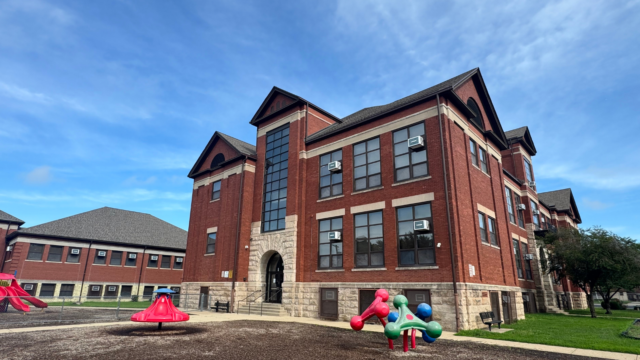
See how Ottawa ESD partnered with HMH to connect instruction, assessment, and data through HMH Performance Suite Into Reading, helping students achieve nearly a year's expected literacy growth by midyear.
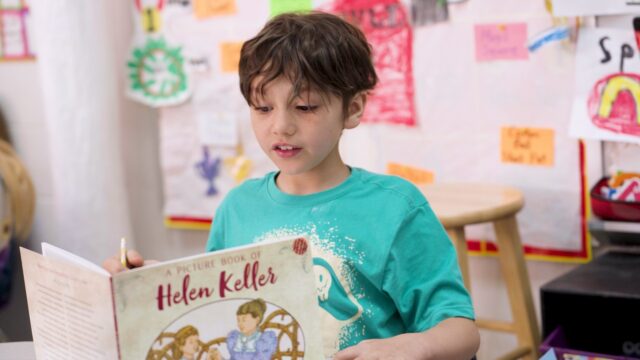
Discover how Morgan County School District in rural West Virginia boosted reading proficiency through Read 180® and MAP® Growth™. Learn actionable strategies for early intervention, data-driven instruction, and fostering student confidence

Reading scores for Connecticut's New Haven Public Schools reached what officials called a “crisis.” Three years later, the numbers are starting to turn around.

Ms. Madge Alexandre, Miami-Dade reading teacher and Read 180 user
Miami-Dade educators share how they guided and empowered students in becoming better readers with Read 180.
***
HMH core, intervention, and supplemental programs are rooted in the science of reading. Find out more about our evidence-based approach to teaching a child to read.
Explore HMH literacy solutions with these digital samples of HMH Into Reading and HMH Into Literature.