





There’s a lot of misunderstanding right now about whether the science of reading applies to multilingual learners.
The same foundational components of reading instruction—phonological and phonemic awareness, fluency, vocabulary, comprehension—benefit all students, including those learning English. These are building blocks that help children learn to decode, make meaning, and become confident readers.
Multilingual learners need nuanced and intentional English language and literacy development. They need intentional content and language development; effective vocabulary instruction and background knowledge-building; and multiple opportunities to build comprehension and oral language skills alongside decoding skills.
Importantly, all of that can—and should—happen together.
Where misconceptions persist
Strong, evidence-based literacy instruction is essential for all students, but for multilingual learners, it must be paired with intentional English language development—particularly through oral language, vocabulary, and comprehension work.
Another misconception is that focusing on foundational skills means instruction becomes rigid or disengaging. In reality, when done well, it’s anything but that. Classrooms can be rich with conversation, interaction, and excitement, especially as students are building early literacy skills.
And yet, too often, multilingual learners are treated as an afterthought in how we prepare teachers for this work. Despite representing 10% of the student population—and one of the fastest-growing groups of students in the country—there’s still not enough emphasis on them in teacher preparation or professional learning.
The role of language—and why it matters
One of the most important elements of early literacy, especially for multilingual learners, is oral language. Children need to hear language, use language, and make sense of it in meaningful ways. That’s what helps them connect sounds to meaning and eventually to text.
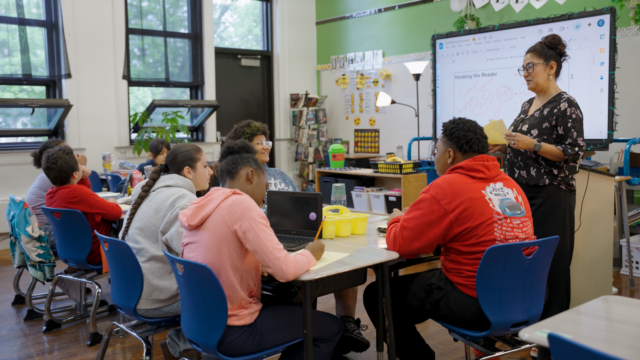
In early childhood settings, that looks like print-rich environments: classrooms filled with the letter of the alphabet, labels, many books, other print materials, conversation, storytelling, and rich vocabulary. For example, educators intentionally pointing out letters and the sounds they make, reading aloud, asking questions, and creating space for students to talk and engage with ideas.
But it also means recognizing the value of a child’s home language.
There’s a common concern among families that if a child isn’t speaking English at home, they’ll fall behind. But research and practice tell us the opposite. A strong foundation in a home language actually supports English acquisition. How so? Skills transfer, vocabulary connects, and understanding builds across languages. In fact, studies show that bilingual and dual language programs consistently show strong academic outcomes, not just for multilingual learners, but for all students.
A strong foundation in a home language actually supports English acquisition. How so? Skills transfer, vocabulary connects, and understanding builds across languages.
Director of Educational Issues, American Federation of Teachers
What educators need to make this work
When we talk to educators, especially educators new to the profession, the message tends to be that they want to do this well, but they need better support. That means access to high-quality, research-based instructional materials that are practical and usable in the classroom. It also includes opportunities to see strong instruction in action through video, coaching, or time spent with experienced teachers.
There’s also a need for more robust clinical experiences in teacher preparation, strong mentorship models, and access to specialists and professional learning communities.
Encouragingly, there are more resources featuring the best research and exemplary practice available now than ever before—from platforms like Colorín Colorado, Reading Rockets, and Reading Universe. But access alone isn’t enough. Systems need to ensure that educators are equipped to use these tools effectively.
Where policy needs to go next
So what policy shifts are needed to ensure literacy efforts fully and effectively support multilingual learners?
Well, we need stronger teacher preparation programs that integrate both the structured literacy and the science of English language development. We need investment in building a workforce that is prepared to support multilingual learners from day one. There’s also an opportunity to expand bilingual and dual language programs, which are often in high demand and offer clear academic and cognitive benefits.
More broadly, though, we need sustained commitment—both in funding and in political will—to guarantee that literacy efforts truly reach every student. Because ultimately, literacy is more than an academic goal. It’s a foundation for opportunity, a civil right, and essential to preparing students to succeed in school and participate fully in society.
***
For more articles on trends in education from experts, subscribe to HMH's LinkedIn newsletter, Policy in Motion.
Get actionable strategies to guide instruction with a free Science of Reading eBook.