




Summary
A focused commitment to reading instruction and student support helped Morgan County School District achieve meaningful literacy growth.
In the rolling hills of rural West Virginia, Morgan County School District is a close-knit community where neighbors know each other by name and the local schools serve as the hub of daily life. With approximately 2,100 students spread across small towns and countryside, the district faces the challenges common to rural America: limited resources, a high percentage of families qualifying for free and reduced lunch, and classrooms where teachers often wear many hats. Despite these relatable challenges, Morgan County educators and families share a deep commitment to helping their students succeed.
A community committed to reading
Morgan County had a simple but powerful goal: to help every student become a confident reader. The district implemented HMH Read 180®, a comprehensive reading intervention program, and paired it with the NWEA® MAP® Growth™ assessment. Students receive 50 minutes of targeted reading instruction each day, four to five times a week. This consistent approach ensures that every child has the opportunity to build foundational skills and develop a love for reading.
The district’s commitment is reflected in Principal of Warm Springs Intermediate School, Becky Huber, who said, “You need a strong reading program at the elementary level, and you have to follow it with fidelity. Our community needs this. For our community to thrive, they [students] need to be able to read.”
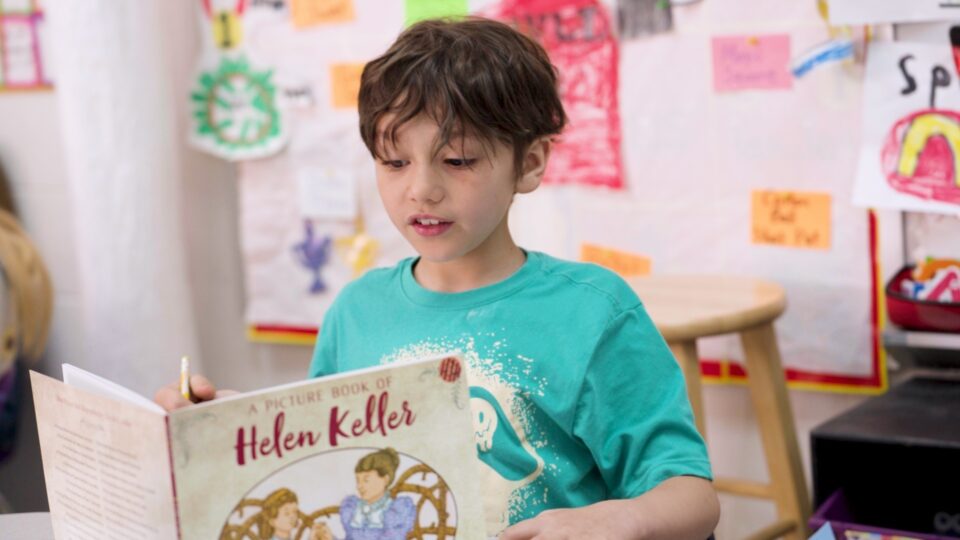
Special education teacher Tina Rose, who has taught at Warm Springs Intermediate for 26 years, sees how Read 180 creates excitement in her classroom, “My fifth graders get really excited about getting together and reading every day. They remember the things we talked about yesterday and build vocabulary.” Rose notes that students are highly engaged with both whole group and small group lessons, and they look forward to their time working on the program’s interactive app. “They really enjoy the stories and lessons, and you can see their confidence grow as they master new skills.”
Data-driven insights for seeing student progress
Morgan County’s approach is rooted in data. Teachers use MAP Growth to gain real-time insight into student progress, guiding instruction and identifying when students are ready to move ahead.
Title I Reading Specialist Margee Hill explained, “MAP Growth gives me an accurate measure of where my students are, especially with comprehension levels. It lets me know what I need to do to help them prepare for the state assessment.”
Early identification and intervention
With MAP Growth, Morgan County educators can identify students who need additional support early in the school year, ensuring timely interventions and preventing learning gaps from becoming entrenched. This proactive approach allows teachers to continuously monitor progress and adjust instruction before gaps potentially widen.
Rose adds, “At the beginning of the year, we give the kids their first assessment and then meet one-on-one to talk about what it means, what our expectations are, and what areas we could be working on. Throughout the year, we’re focusing on keying in and being cognizant of how this is going to help us get where we want to go.”
Tier 2 and Tier 3 students work on lessons aligned to their reading level and learning needs. In Read 180, some students focus on comprehension, practicing understanding, writing, analyzing, and responding to text. Others build foundational skills like decoding, spelling, and vocabulary. Each intervention lesson completed is a measurable step toward grade-level mastery, and progress is tracked weekly to ensure no student falls behind.
of students reached reading proficiency, surpassing state averages
of students exited intervention within one year
of comprehension students exceeded typical growth
Celebrating student growth
Morgan County recognizes growth in many ways. Certificates, prizes, and schoolwide celebrations mark student achievements, turning progress into a community event. Students gain skills faster than typical end-of-year expectations, and high-interest lessons keep kids motivated and confident.
Rose shares how she tracks progress in her classroom, “I have their charts on the board for kids that are in the code. Every time they pass a lesson, they get to put a sticker on the charts. They’re really excited about watching that progress.” She’s watched students mature and recognize their own growth, “They’re recognizing now that the year is almost over, how much progress they’ve made.”
The impact of these interventions is clear. In one third-grade group, 17 out of 32 students exited intervention after reaching grade level. Across the district, reading proficiency climbed to 55 percent, surpassing the state average. 50 percent of students exited intervention within one year of instruction, while 46 percent of comprehension students and 32 percent of foundational students exceeded typical growth.
Superintendent Dave Banks summed up the district’s confidence in their approach: “The data shows us over and over that Read 180 works. So why mess with something that’s going well?”
Explore the free guide, Beyond Intervention: How to Make Proficiency Stick for Every Learner, to learn five key strategies that, when consistently applied, can transform fragile proficiency into genuine, lasting growth.
Students finding their voice
The transformation in Morgan County is not just about numbers. Students are discovering their abilities and gaining confidence. Braylin, a Morgan County student, shared, “Before [Read 180], I probably couldn’t even read half of a book. Now I can read a whole book. I’ve even grown my spelling and my confidence.”
Teachers have noticed shy students becoming active learners, raising their hands and tackling challenging lessons with determination. Every small victory is further proof that the district’s commitment to giving every child the right support is paying off.
Rose recalls a success story from one of her students, “I had a little boy who at the beginning of third grade was basically a non-reader. He missed a lot of school and had a speech impediment. We worked really hard, [and] his progress just shot right up. He was volunteering to read, which he would never have done before. He’s really thriving now without any special ed services.”
A collaborative environment for professional development
Morgan County teachers and interventionists regularly review data together, brainstorm strategies, and share best practices to ensure every student receives the support they need.
As Rose shares, “We have been able to work as a team, interventionists and special ed teachers. We get together and brainstorm about things like, ‘What have you found that works? How have you figured out how to get to this place or how did you find that?’”
District leaders in Morgan County support teachers with ongoing professional development focused on interpreting MAP Growth data and using it to inform instruction. Regular data meetings help educators stay aligned and focused on student growth.
Rose also highlights the value of having assessment and instruction on one platform, “It’s made a big difference with staying consistent, knowing where the charts are and the reports we need, knowing where to look for the specific data to support the next set of lessons or shore up skills. Having it all in one place has been a benefit.”
An intervention model that works
Morgan County’s success with Read 180 has inspired the district to expand its intervention model using HMH's connected solutions. The district has implemented Math 180, a research-based program that targets math’s foundational building blocks and pre-algebraic skills. Like Read 180, Math 180 adapts to each student’s needs, helping them build confidence, master essential concepts, and achieve measurable growth.
Morgan County’s intensive intervention approach is a model for districts everywhere. With the right combination of high-quality programs, meaningful data, and a supportive community, students can surpass expectations. The district’s story proves that rural communities can achieve extraordinary results when they commit to giving every child the support they need.
The data shows us over and over that Read 180 works. So why mess with something that’s going well?
Superintendent, Morgan County School District
Actionable strategies for rural districts
Drawing on Morgan County’s experience, other rural districts can try adopting these strategies to drive student growth and close learning gaps:
- Use MAP Growth to identify learning gaps early and monitor progress.
- Foster collaboration among educators to share data and strategies.
- Celebrate student growth to build motivation and confidence.
- Provide ongoing professional development in data-driven instruction.
- Implement research-based intervention programs with fidelity.
Learn more about Morgan County's success with Read 180 and connected solutions from HMH.
***
Unlock whole-brain reading through Read 180, the leading reading intervention program for Grades 3–12.
Key takeaways
- Using data to guide instructional decisions allows educators to respond more effectively to student needs and monitor progress over time.
- Student engagement and confidence grow when learners experience regular opportunities for success and skill development.
- Strong literacy outcomes are supported by aligning instructional practices, intervention efforts, and community support around a common vision.
Get the free guide, Beyond Intervention: How to Make Proficiency Stick for Every Learner.
Related Reading

Explore reading intervention strategies for struggling readers, with practical approaches to help educators address reading challenges and support literacy development.

Explore why using assessment data to inform instruction is key to making informed teaching decisions and improving student achievement.
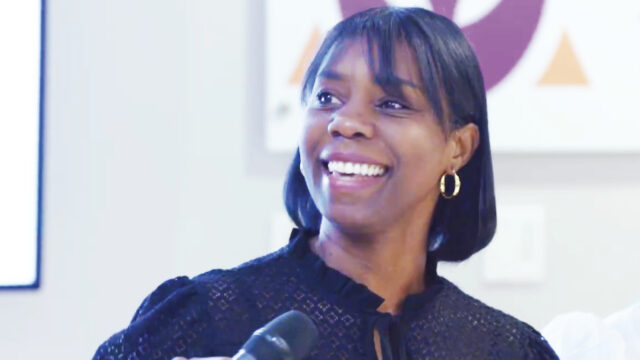
Ms. Madge Alexandre, Miami-Dade reading teacher and Read 180 user
Miami-Dade educators share how they guided and empowered students in becoming better readers with Read 180.