





Summary
Ottawa ESD accelerated literacy growth by aligning curriculum, assessment, professional learning, and instructional support through a connected approach.
New curriculum implementation tends to come with a learning curve, with an impact on student growth often beginning in year 2 and beyond.
That's why the midyear results in Ottawa Elementary School District 141 in Illinois caught district leaders by surprise, in the best possible way.
Less than a year after implementing HMH Performance Suite Into Reading, Ottawa ESD's data showed that by midyear, students in grades 2–4 already had achieved approximately 90% of the district's expected full year growth.
For Christine Bucciarelli, Assistant Superintendent for Curriculum and Assessment for Ottawa ESD, the results were especially surprising because they were still in the first year of implementation, “We thought this would take years. But look how far we've come in this short amount of time. I can only imagine how far we're going to be in a few years.”
But achieving results like these started with how Ottawa ESD and HMH partnered from the onset. HMH understood early on that the district needed to solve a problem that many other school systems also face: too many disjointed resources, too many competing priorities, not enough professional development for teachers, and not enough insights into what students might need for differentiation.
of a full year's typical literacy growth by midyear (Grades 2–4)
of a full year's typical literacy growth by midyear (Grades K–1)
Partnership begins with understanding the needs of a district
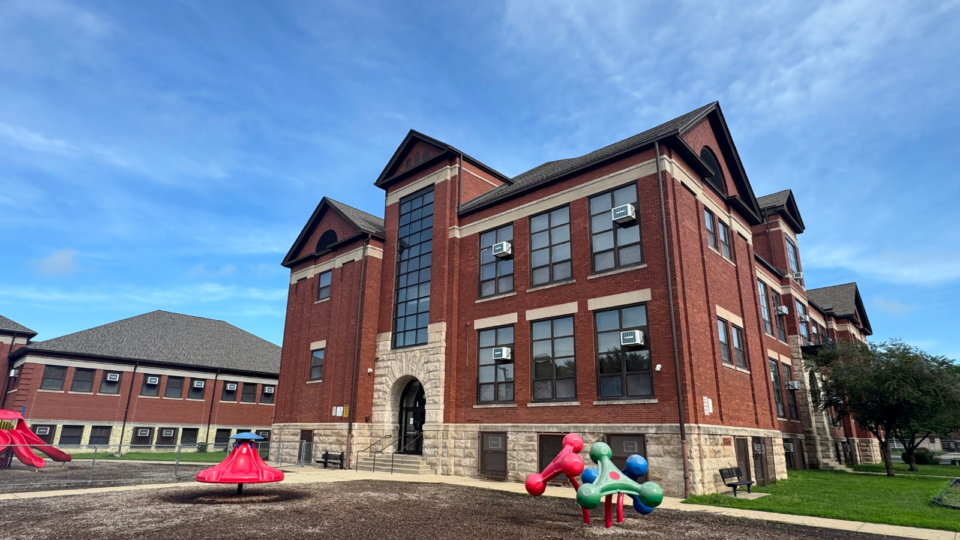
Ottawa ESD serves approximately 1,700 students across five schools in north-central Illinois, with about 70% of students qualifying for free or reduced-price lunch.
For Bucciarelli, implementing a new literacy solution was never just about selecting curriculum materials. She knew it required a partner that understood the district's needs and would remain engaged throughout implementation.
“A lot of times when you buy a curriculum, it's really heavy support in the beginning,” Bucciarelli says. “Then once the materials arrive, it's like, 'We'll talk to you next year.' HMH did not do that.”
Instead, she says the HMH team stayed active, responsive, and invested in the overall instructional goals for Ottawa ESD.
“I've worked with multiple [edtech curriculum providers], and I've never had this type of partnership or customer service,” Bucciarelli says.
That support mattered because Ottawa ESD was rethinking how literacy instruction worked throughout its elementary schools.
A district looking for greater instructional coherence
Shortly after the pandemic, district leaders began taking a closer look at classroom practices and student data. They found: Reading and writing were housed in separate programs; Phonics often required supplemental materials; Teachers spent significant time pulling resources from different places and trying to determine which tools best matched student needs.
“We needed something comprehensive,” Bucciarelli says. “We needed something that was going to be all-encompassing.”
At the same time, science of reading research prompted the district to reconsider aspects of its instructional approach. "We realized that philosophically we had some good things in place, but we needed to change our instruction,” Bucciarelli says. “We needed a heavier component of phonics, and we wanted writing to be a part of it.”
For teachers, the challenge wasn't a lack of effort or a lack of resources. It was the challenge of making everything work together. “Teachers were just feeling overwhelmed,” Bucciarelli says. “They felt like they had a ton of resources, but they didn't have the time.”
Teachers were looking at data, trying to identify student needs, and then searching for the right resources to address them. Sometimes resources were hard to find, borrowed by another teacher, or pulled from outside sources that were not always research based or aligned to standards.
“They would look at data and they'd say, 'We have all these things, but I don't even know where to start. What is going to help me solve this deficiency?'” Bucciarelli says.
When Ottawa ESD's curriculum committee began reviewing options, one solution stood out, “HMH has everything we need. It checked all the boxes.”
Building a coherent approach to literacy
Ottawa ESD intentionally focused on implementation of Performance Suite Into Reading for grades K–4, where district leaders felt strengthening foundational literacy skills would have the greatest long-term impact. Bucciarelli says the district wanted to make sure the early literacy foundation was strong before expanding implementation further across the district.
The rollout started with a clear message to teachers: implementation mattered, but perfection was not the expectation in year one.
Having those guidelines and patience was key because teachers were learning new routines, new tools, and in some cases, new instructional practices. Bucciarelli says some teachers were working with a sound wall for the first time. Others were adjusting to more consistent writing instruction or learning how to use formative data more directly in planning.
The HMH partnership provided more structure around that learning. Ottawa ESD worked with the HMH team to plan implementation before materials arrived, establish goals for year one, and support teachers with training, classroom coaching, and follow-up.
Coachly became an important part of that support by giving teachers live chat support for the personalized PD they needed, when they needed it. Teachers did not have to wait to ask questions or for the next professional learning session or administrator check-in. Bucciarelli says. “To have that option to be able to go to somebody basically 24/7, whether it's chat or live, has been a lifesaver.”
This combination of implementation planning, coaching, professional learning, and ongoing support helped teachers build confidence while learning a new approach.
Integrating instruction and assessment insights
One of the biggest differences Ottawa ESD experienced was how Performance Suite Into Reading connected assessment, planning, and instruction seamlessly, through an instructional cycle they were used to but in ways teachers hadn't previously experienced.
Before implementation of Performance Suite, teachers spent time reviewing NWEA MAP Growth and all program assessment data to understand student performance, but determining what to do next in the classroom often required additional analysis and planning. By bringing together interim assessment data from MAP Growth and core program assessment data from Into Reading, teachers immediately receive insights they need to inform instructional planning, with a better, more complete picture of student learning.
Relying solely on periodic interim results to identify where additional support was needed was not enough. With assessment insights tied directly to instructional recommendations, and the resources teachers need to remediate and reteach with, teachers spent less time trying to source the right materials. All of this information became available to teachers within the Planning Assistant, a feature of Performance Suite that provides real-time information, based upon the last lesson taught, on what students know and what they need.
“I think it all connected very well,” Bucciarelli says. “Having this real-time data at their fingertips really changed how the next lesson would look and how it would feel.”
That was a shift for teachers. Instead of taking data home, grading, and replanning for the next morning, teachers could use the planning assistant feature to help them decide whether to reinforce skills or move forward.
With these features as part of the instructional cycle, the solution created instructional coherence: consistent lesson structures, embedded supports, standards-aligned teacher resources, real-time data, and ongoing coaching and professional learning.
Performance Suite Into Reading provided consistency across Ottawa ESD's three K–4 buildings. Before, teachers might have been working toward the same standard but using different assessments, resources, or timelines. Now, administrators and teachers can monitor progress more consistently.
“Before we were comparing apples to oranges,” Bucciarelli says. “Now we have a common vocabulary. We're all looking at the same data,” which provides the district with actionable insights to review, reflect, and plan an instructional path forward.
Results came faster than expected
By midyear in the 2025–2026 school year, Ottawa ESD was already seeing evidence that the work was paying off.
Students in grades 2–4 achieved approximately 88%–91% of a full year's typical literacy growth by midyear. While kindergarten and grade 1 students achieved approximately 73%–74% of a full year's typical growth by midyear.
The district also experienced movement across performance tiers:
- Tier 1 increased from 33% to 44%
- Tier 2 decreased from 45% to 36%
- Tier 3 decreased from 23% to 20%
“When we were actually able to see that data, everybody was just overjoyed,” Bucciarelli says.
Students gained confidence
According to Bucciarelli, children became more confident in both reading and writing as the year progressed. “The kids are feeling excited,” she says. “'Look, I read this. I can write this.'”
Students who once needed help to express their ideas were writing more, creating more complex responses, and eagerly sharing their work with teachers, principals, and families.
For district leaders, that confidence was just as meaningful as the growth data. It showed that students were beginning to see themselves as readers and writers. And for a district that started this work hoping to strengthen foundational literacy skills, that growing sense of ownership and pride may be one of the strongest indicators that the work is taking hold.
What other districts can learn
Ottawa ESD's success came from creating greater coherence across literacy instruction—and from having a partner committed to supporting that work every step of the way.
Performance Suite Into Reading brought together high-quality instructional resources, a research-aligned instructional foundation, insights from all interim and program assessments, planning tools, and coaching into a more connected experience for teachers. Planning Assistant streamlined lesson planning and resource access. Coachly provided live personalized coaching and implementation support.
Ottawa ESD's story highlights that strong implementation, sustained partnership, and connected instructional tools work best when they are integrated and designed with teachers and students in mind. When they do, teachers feel more supported, data becomes more actionable, and student growth can accelerate faster than expected.
***
Learn how HMH Performance Suite helps educators connect instruction, assessment, and data to provide the right support at the right time.
We want to hear from you! For questions, comments, or feedback, please contact us at Shaped@hmhco.com or follow us on Instagram, LinkedIn, and YouTube.
Key takeaways from Ottawa ESD's literacy transformation
- Partnership matters. Sustained implementation support, coaching, and responsiveness helped Ottawa ESD move beyond curriculum adoption to lasting instructional change.
- Implementation drives outcomes. Giving teachers time, grace, professional learning, and coaching support created the conditions for successful adoption.
- Instructional coherence reduces overwhelm. Consistent lesson structures, aligned resources, embedded supports, real-time data, and ongoing coaching helped teachers focus on instruction instead of managing disconnected tools.
- Connected systems make data actionable. By linking assessment, planning, and instruction, teachers could respond more quickly and confidently to student needs.
Get strategies to deliver the right instruction at the right time.