





Summary
In outcome-based contracts, a portion of payment depends on achieving measurable student results, creating shared accountability through clear goals, transparent metrics, and ongoing support.
In my work with districts and partners, I’ve seen growing interest in outcome-based contracting (OBC). I’ve also seen that putting it into practice requires clear structure and shared expectations.
A report released earlier this year from Digital Promise and The Center for Outcome Based Contracting (COBC) helps illustrate what that looks like in real life. It examined several districts that piloted OBCs with staggering results: student usage of edtech tools increased to rates 10 times higher than under traditional contracts. The report also highlights key markers of a successful OBC model and what it takes to structure these contracts well.
But one example falls outside the report: Hillsborough County Public Schools (HCPS) and their outcomes-based funding contract for the Read 180 intervention program.
HCPS—the seventh-largest school district in the nation—structured the agreement so that roughly half of the total contract value is contingent on students hitting specific reading targets. The program targets ninth- and tenth-grade students reading below proficiency during the 2025–26 school year.
Today, we’re beginning to see those results: approximately 50% of students receiving intensive intervention demonstrated at least one year’s growth on Florida’s statewide assessment, while 23% achieved proficiency. The district has since expanded intensive intervention into its middle schools, which is a strong signal of confidence in both the partnership and the model.
What makes this example notable is not just the scale of the district, which serves more than 7,000 high school students within the Read 180 program, but how intentionally the contract is designed to tie implementation, accountability, and outcomes together. This intentionality reflects a broader set of principles that can help outcome-based contracts succeed in practice.
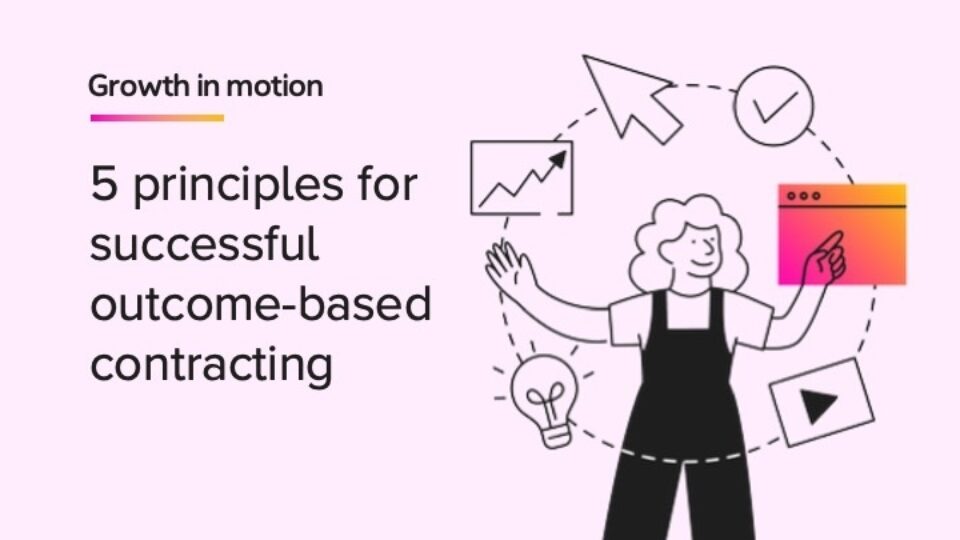
Here are five of those principles—and how the Hillsborough agreement brings each to life.
1. Start with a shared language and a clear framework.
An OBC model only works when all parties share a common understanding of terms, goals, and scope. The Hillsborough contract makes the district’s priorities clear: the focus is on student outcomes, not on how the program is ultimately operated. This gives the provider flexibility to adjust its approach as long as goals are met.
Critically, the contract also defines the target population and includes baseline performance data from 2023–24 for a comparable student group, anchoring outcome targets in evidence rather than aspiration.
Digital Promise’s research underscores why this step matters: districts that struggled to identify target populations or set realistic outcome goals often encountered challenges later in implementation. Hillsborough built that foundation before the first student logged in.
2. Define metrics that are meaningful, measurable, and ambitious.
The Hillsborough contract specifies student outcome metrics that combine growth and proficiency on Florida’s statewide FAST ELA assessment, measured at both mid-year and end-of-year. This dual-lens approach captures whether students are improving and whether they’re reaching grade-level proficiency.
The targets were deliberately ambitious. In 2023–24, just 5% of students scored proficient by year’s end, and only 18% demonstrated full-level growth. While there is always more work ahead, those results from this first year of implementation offer encouraging signs.
The contract also tracks process outcomes—student dosage, teacher satisfaction surveys, and provider responsiveness—that inform continuous improvement without being tied to payment.
3. Tie payment to results—with transparency.
Roughly 50% of the Hillsborough contract’s total value is contingent on meeting student outcome targets, with fidelity to dosage. If the tool doesn’t produce the expected gains, the provider doesn’t earn the full contract amount. The agreement includes a transparent framework specifying which outcomes unlock which payments, so both the district and provider understand the structure before the school year begins. An important lesson here was to ensure that the quantification of growth was simplified—making it easy for both provider and district to track—and include within-year growth.
Digital Promise’s research notes that the OBC model requires “a market pricing transparency that is not currently available in edtech,” making contracts like Hillsborough’s—which lay out the financial logic plainly—particularly significant as early models for the field.
4. Build mutual accountability.
Digital Promise found that “the districts that were most successful in mitigating challenges relied on cross-functional teams with clearly defined roles and strong working relationships.” Hillsborough’s contract operationalizes this through a mutual accountability structure that clearly delineates what each party must deliver. Among other provisions:
- The district commits to providing bandwidth for student access, scheduling sufficient intervention time to meet minimum dosage requirements, and administering the FAST assessment three times during the year.
- The provider commits to delivering an Implementation Success Plan, providing weekly usage reports, and engaging in a continuous improvement process throughout the program period.
As with any model, success depends on effective implementation—an outcome-based contract cannot be ‘deliver and forget.’
SVP of Policy & Engagement, HMH
5. Invest in educator and district support for continuous improvement.
As with any model, success depends on effective implementation—an outcome-based contract cannot be “deliver and forget.” Hillsborough embeds this principle through a three-tier framework:
- District Data Reviews: examining student progress, usage data, coaching activity, and assessment results
- District–Provider Coordination Meetings: aligning on implementation plans, professional learning, and data-sharing processes
- School-Level Data Reviews: drilling into site-specific performance with school contacts
To support successful implementation, the agreement also includes robust, job‑embedded professional learning for teachers. Educators receive a combination of initial “Getting Started” training, ongoing coaching, and personalized learning pathways, alongside on‑demand resources and in‑person support throughout the school year. This sustained model is designed to help teachers effectively use data, adjust instruction in real time, and implement the program with fidelity. Finally, the contract also formally includes teacher satisfaction surveys at midyear and end-of-year, along with monthly meetings to capture educator feedback. This ensures that on-the-ground voices shape ongoing implementation—exactly the kind of school-level engagement Digital Promise recommends.
Key takeaways
- Successful outcome-based contracts begin with clearly defined goals, target populations, baseline data, and shared expectations between districts and providers.
- Connecting payment to clearly defined outcomes creates shared accountability, particularly when both parties understand how results will be measured and funded.
- Ongoing data reviews, professional learning, coordination, and educator feedback help keep implementation responsive throughout the contract period.
***
For more articles on trends in education from experts, subscribe to HMH's LinkedIn newsletter, Policy in Motion.
Get the guide “Beyond Intervention: How to Make Proficiency Stick for Every Learner.”