





Advancements in technology have led to new possibilities in data-driven instruction. When properly collected and analyzed, assessment data provides educators with precise insights that can inform an effective, engaging, and personalized learning plan for each student. Here we look at the role of assessment data in education and how to use it to guide instruction.
What is assessment data?
Assessment data is an umbrella term that encompasses every piece of information an educator can gather about student learning. By examining data from formative check-ins to summative evaluations, educators begin to understand where students stand academically and what kinds of instructional modifications may be needed to support their continued growth.
But unlike traditional grading systems that separate students into basic categories of achievement, the assessment data available today provides granular insights into specific learning gaps, individual learning needs, and readiness for new material. For these reasons, the tech-savvy use of data in education is now widely seen as essential for instructional improvement.
Role of data and assessment in education
Assessment data plays a critical role in supporting data-driven decision making, enabling educators to build on their strengths with evidence-based practices. At the classroom level, assessment data helps teachers understand individual student needs, assign students to the right interventions and learning groups, and ultimately move closer to the ideal of personalized education, matching each student with a tailored learning pathway. At the school or administrative level, aggregated data helps leaders identify systemic challenges, make better-informed resource allocation decisions, and provide teachers with relevant professional development opportunities.
“At any given point, educators need to know where they stand, where they've been, and where they’re going,” writes Dr. Stephan Knobloch, senior director of academic planning and analytics at HMH. “Data serves as directional evidence of where a student, grade, school, or district is and what direction to take next.”
While precise measurement of achievement and growth is invaluable, the importance of data in education is about much more than number crunching. Strong practices include using multiple measures of student learning, reviewing data collaboratively, and connecting findings directly to instructional planning. When used this way, data becomes a tool for growth, helping educators identify learning needs that bring grade-level expectations—or beyond—within reach for each student.
Types of student assessment data
Using assessment data to inform instruction requires multiple types of data to gain a clear picture of student growth. Here are four types of assessments that generate the data teachers need:
- Formative assessments are ongoing checks for understanding that give timely feedback to help teachers adjust instruction. They can take many forms—such as quizzes, exit tickets, observations, or discussions—and are typically low-stakes.
- Summative assessments take place at the end of instructional units, providing educators with comprehensive data about mastery of specific standards.
- Diagnostic assessments, sometimes given prior to starting a new unit or topic, reveal learning gaps, misconceptions, or other challenges that teachers can address through direct instruction. Teachers can also use these assessments to identify specific skills and concepts that are preventing students from moving forward and need further development.
- Interim assessments, given several times throughout the academic year, provide a clear picture of student performance and growth. By generating actionable data while there’s still time to adjust instruction, interim assessments help teachers keep curricula aligned with students’ changing needs.
Note that student assessment data is essential for adjusting instruction as well as planning at the school and district level.
Assessment data analysis and reporting
When reviewed thoughtfully, assessment data offers powerful insights into student learning. A systematic approach to analysis helps uncover patterns and trends across individual students, classrooms, and grade levels, making it easier to inform instruction and support growth.
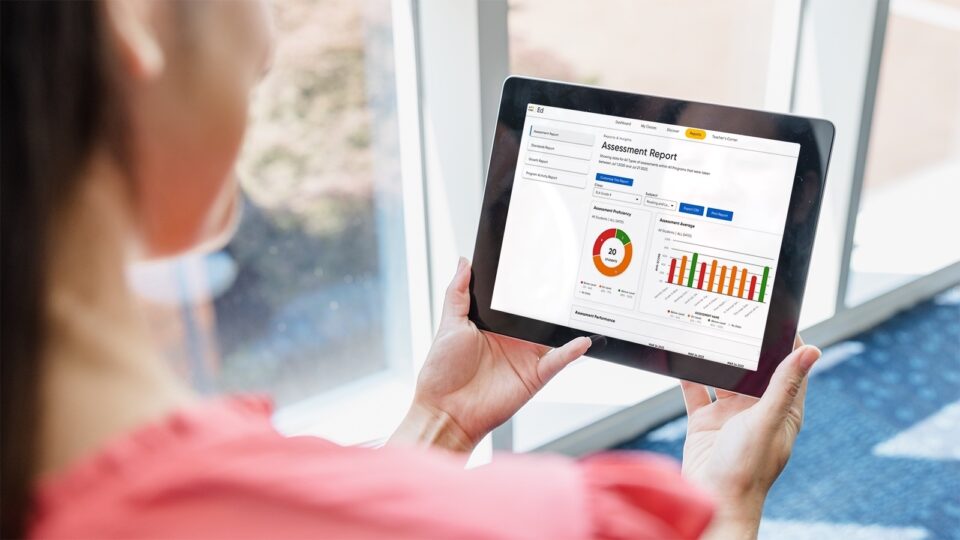
Fortunately, as edtech platforms become more powerful, they’re also improving how they present information, with dashboards and reporting tools that make student performance data easy to understand. These tools let educators quickly see who’s exceeding expectations and who needs additional support.
And because assessment data matters to teachers, school staff, caregivers, and the wider school community, reports should be clear, with a balanced focus on both achievement and areas for improvement. By emphasizing growth over time instead of single data points, educators can help everyone see learning as a continuous process.
How to use assessment data to inform instruction
“Great teaching is one of the strongest levers we have for improving student outcomes, but it’s not magic,” writes Francie Alexander, HMH’s senior vice president of efficacy and consulting research. “It’s strategic, adaptive, and evidence-based. Education data, when used wisely, helps make great teaching possible.”
Indeed, the goal of collecting assessment data is to improve—maybe even transform—instructional practices and student outcomes. To make that happen, data should lead to real actions. Here are some practical steps:
- Adjust lesson plans in real time, addressing specific needs identified through student performance. This might mean reteaching a concept if the data shows that several students haven’t mastered it.
- Use assessment results to provide practice to students who need reinforcement and enrichment to those who are ready for new challenges.
- Form flexible instructional groups based on learning needs so students have the targeted support they need in a collaborative setting.
- Ensure the curriculum matches students’ needs by reviewing materials and teaching strategies when data shows changes are needed.
- Provide the support, resources, and professional development needed to maximize the use of data, while building shared responsibility between teachers and educational leaders for continuous improvement.
Data analysis in schools
At the district and policy level, assessment data analysis takes on broader significance, informing decisions about resource allocation, program effectiveness, and systemic improvement initiatives. School leaders use aggregated assessment data to set school- and district-wide improvement goals that reflect current performance and growth targets. This data helps identify schools or programs that require additional support and highlights successful practices that can be scaled across the district.
Assessment data also plays a crucial role in informing professional development decisions, helping administrators identify the skills and knowledge that teachers need to improve their instructional effectiveness. Rather than implementing generic training programs, data-informed professional development can address the specific challenges educators face in their classrooms.
Compliance with state and federal reporting requirements represents another important application of data analysis in schools, ensuring that schools meet accountability standards while maintaining focus on driving student growth. When used strategically, these reporting requirements can drive positive changes in instructional practice rather than create administrative burdens.
Building a data-informed culture
When a school’s data efforts start showing results and more teachers and staff can draw a straight line between these data practices and the improved student outcomes everyone wants to see, data use becomes a lasting part of the school’s culture. Creating a data-driven culture in schools begins with building trust among everyone involved, ensuring that data is viewed as a tool for improvement rather than criticism or discipline.
Additionally, training staff in data literacy helps drive cultural change, giving educators the skills to collect, analyze, and act on assessment information. Professional learning should help teachers understand different types of assessment data, interpret results accurately, and turn findings into instructional strategies.
School leaders know they’ve succeeded when teachers, students, administrators, and caregivers grasp the powerful connection between data and assessment and continuous improvement. When that happens, data becomes less about numbers on a spreadsheet and more about having a practical tool to help every student succeed.
As NWEA’s Principal Assessment Designer Mary Resanovich put it, assessment data “is not the final word on student learning—it’s the beginning of a deeper conversation. It provides a valuable starting point for identifying trends and asking meaningful questions at every level of the education system.”
***
Check out our webinar, “Crafting Impactful PD for Teachers and Leaders,” to learn how to leverage data for effective PD.
For more on data-driven assessments and instruction, explore HMH assessments that help educators gain a complete picture of student achievement.
Turn data into timely, targeted instruction for every student.