






Summary
The article explores key AI findings from HMH’s 2026 Educator Confidence Report and what they reveal about the support educators need to use and teach AI effectively.
Of all the statistics from HMH’s 12th Annual Educator Confidence Report, a survey of 1,200 K–12 educators from across the country, there’s one that’s sure to catch your eye. Eighty percent of educators now incorporate AI tools into their workflow, up from 67% last year and just 10% in 2023. That’s a quick shift.
But a few of the stats tell a more complicated story: there’s a gap between using AI and feeling equipped to use it well. Here are three findings worth a second look as you refine your school or district AI strategy.
1. Adoption jumped. Confidence didn’t.
While AI usage climbed 13 points in 2026, HMH’s AI Confidence Index—a measure of how educators rate their own AI knowledge, skills, and comfort—held flat at 66.0, the same score as 2025.
Get the results of our annual survey of educators.
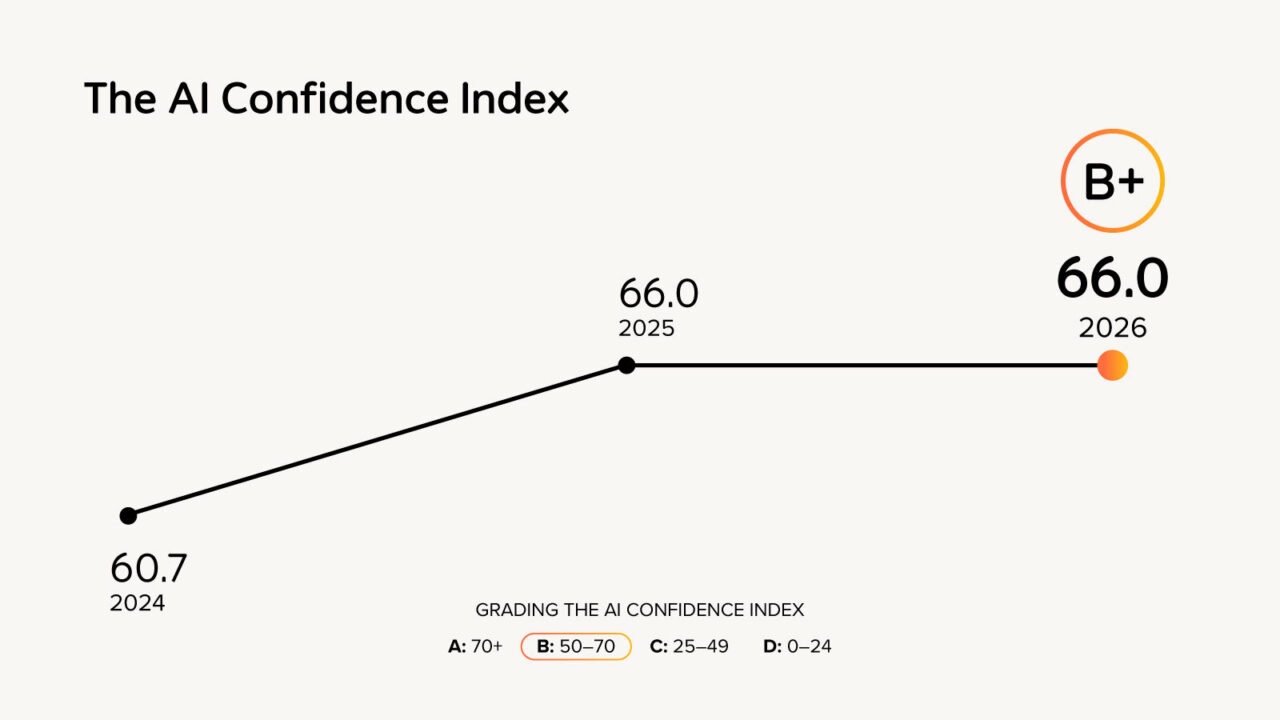
That’s not a bad grade (a B+), but it is a stall. More educators are using AI than ever, yet they aren’t reporting more confidence about it than they did a year ago. This suggests the growth was educators trying AI, not necessarily mastering AI. Adoption is outrunning readiness.
Professional development aims to close this gap. If you’re planning PD in AI for the year ahead, these blogs can help:
- 2026 Professional Development Topics for Teachers
- AI Tools for Teachers and Educators: What These Tools Can Do and How to Use Them
2. Educators trust their own AI use more than they trust their ability to teach it.
Here’s a gap that’s easy to miss because the two stats shown side by side highlight a positive trend: 87% of educators feel confident that their AI use is instructionally effective. And 62% feel confident they know what to teach students to prepare them for an AI-powered world, up 13 points from last year.
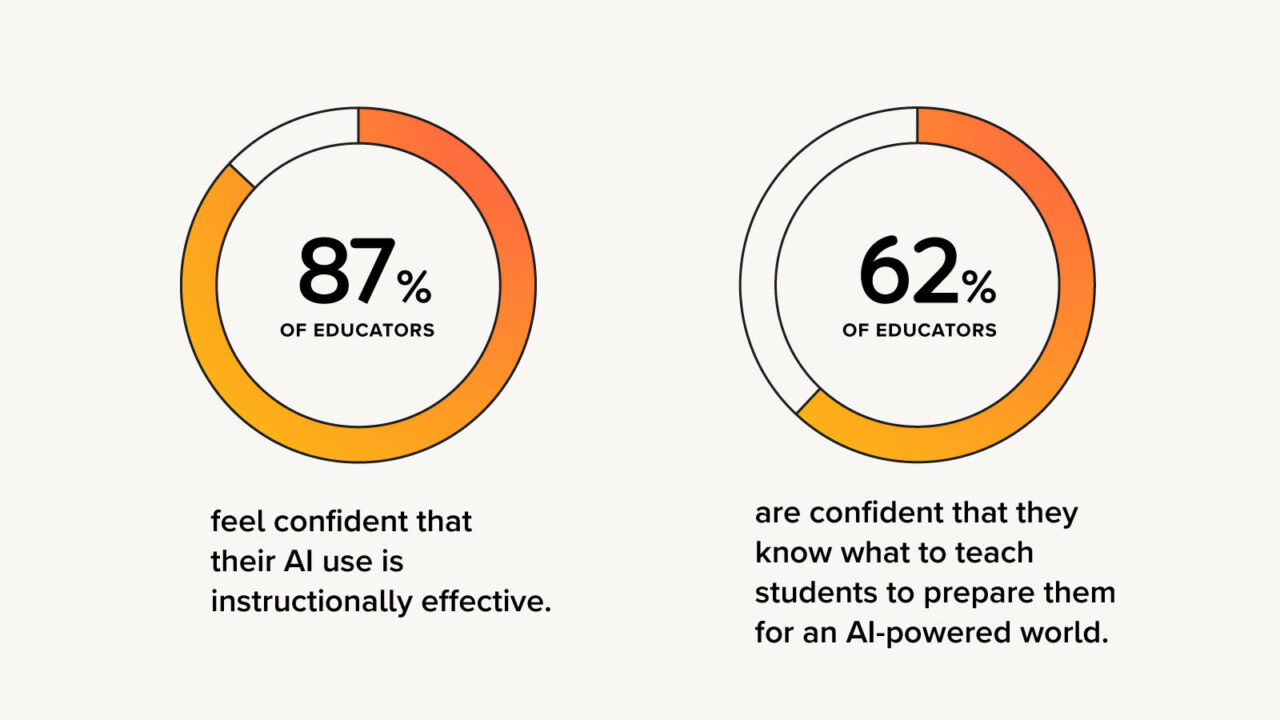
But the gap between the numbers speaks volumes. We’re looking at a 25-point disparity. Educators have largely figured out how to use AI for themselves: lesson planning, differentiation, and communication. What’s lagging is confidence in AI literacy instruction: helping students understand how these tools work, where they fall short, and how to use them responsibly. It’s a reminder that “AI training” and “teaching AI literacy” are two different things, and we have to pay attention to both. These blogs can help teachers confidently build AI literacy in their classrooms:
- AI Best Practices: Developing AI Literacy in the Classroom
- A Quick Guide to AI Literacy Day for K-12 Educators
3. The top AI worry isn’t so much about the tool; it’s about the teacher’s role.
Among educators who use AI, the top three concerns are overdependence by students, plagiarism and—new this year—the worry that AI will devalue human-led instruction.
That third concern is the one to sit with. It’s not a logistics problem or a policy problem; it’s a question about what AI is for. It lines up with the report’s broader finding that educators aren’t asking for more standalone AI tools. They’re asking for AI that’s embedded in their curriculum and doesn’t compete with the teacher-student relationship. As HMH CEO Jack Lynch puts it in an article on the future of AI for Fast Company: The risk of AI-as-tutor is that it “optimizes the transmission of content while leaving aside the things that actually make learning stick, like a teacher who notices when something is off, who adjusts mid-lesson, who makes a student feel genuinely seen.”
These blogs highlight the importance of keeping teachers at the center of learning:
- In This Moment of AI in Classrooms, Teachers Still Matter Most
- Personalized Learning with AI: Technology Is Catching Up To What Teachers Have Always Known
Closing the gap
None of these three findings contradict the statistic we highlight at the beginning of this blog. AI adoption really is up. But taken together, they point to where education leaders should focus their energy: not getting more educators to try AI, but giving them the guidance to use it well.
Key takeaways about AI from HMH’s survey of educators
- AI adoption is outpacing confidence. AI usage jumped from 67% to 80%, while confidence stayed flat, suggesting educators’ needs are shifting from adoption to guidance on using AI effectively.
- Teaching AI is the next confidence gap to close. While 87% of educators trust their own AI use, only 62% feel confident about what to teach students, pointing to a need for AI literacy support.
- Educators are thinking beyond misuse to AI’s impact on teaching. Overdependence and plagiarism remain top concerns, but educators now also worry that AI could devalue teacher-led instruction. This is a reminder that AI should strengthen, not diminish, the teacher's role.
Explore the full 2026 Educator Confidence Report for the complete findings on teaching, learning, and technology.