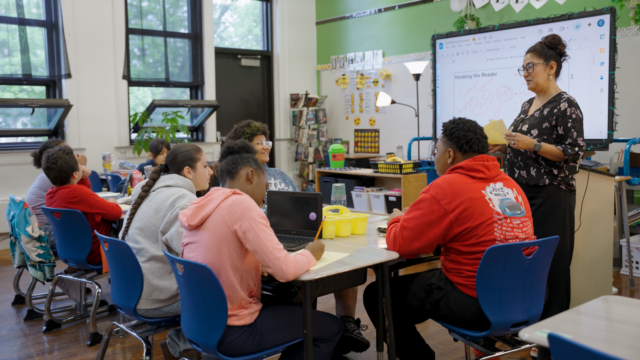




When Marr Cook Elementary adopted a new literacy curriculum, they knew what they expected to see in the data: a dip.
“Typically, we expect a lag in the data for at least two years, and then year three is our victorious year,” said Danielle Stiles, the school’s literacy specialist.
But that dip never came. When winter MAP Growth reading results arrived during the first year of implementation, scores were comparable to previous winters, and in some cases, better. Second grade recorded what Stiles called “the highest MAP reading scores we’ve ever seen in our building.”
The results were especially notable because Marr Cook wasn’t trying to turn around a struggling literacy program. Teachers had spent three years training with Lexia's LETRS and had developed a strong understanding of the science of reading. What they needed was a curriculum and an implementation plan that could keep pace with what they had learned.
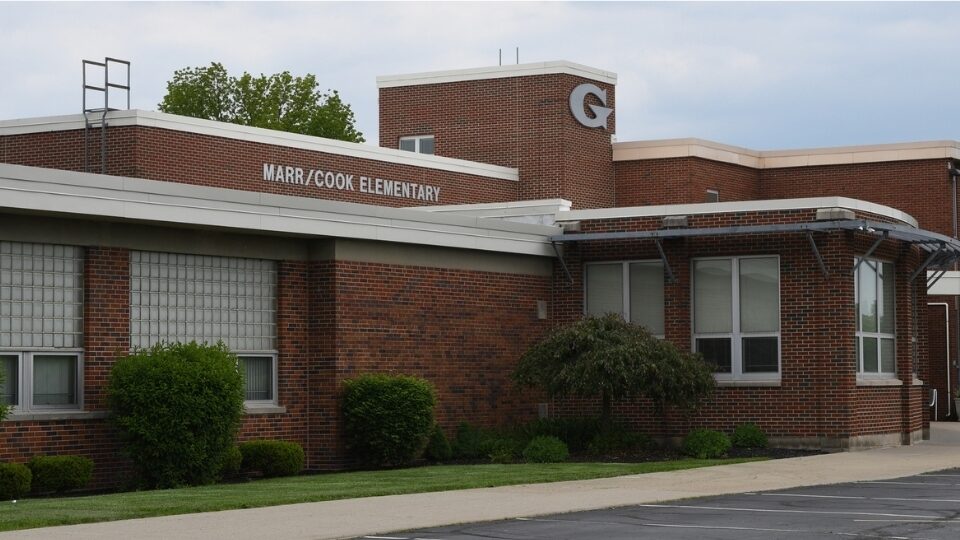
Marr Cook serves about 650 of the district’s youngest learners, from pre-K through second grade, making it a critical starting point for Goshen Local School’s literacy instruction. So what helped Marr Cook get through year one without the expected learning curve? The work started long before teachers opened their new materials.
Choosing a curriculum with teachers, not for them
Goshen’s leaders didn’t begin the adoption process by asking teachers to choose among product features. They began with what teachers already knew about how students learn to read.
Using Scarborough’s Reading Rope as a framework, teachers evaluated how well each program addressed the interconnected skills students need—from phonics and vocabulary to language comprehension, writing, and knowledge building.
“We have to find a curriculum that addresses all of these strands [of the Reading Rope], not just one of them,” Stiles said.
The district narrowed the field to three finalists and piloted each for six to eight weeks. Teachers used the materials with students, discussed them during PLCs, submitted questions, and shared what was and wasn’t working. Some even asked to continue their pilot beyond the planned window.
By the end of the process, all but three teachers chose HMH Into Reading—a 94% vote from the staff.
For Curriculum Director and Assistant Superintendent Theresa Scherzinger, that level of support was part of the implementation strategy.
“When you give [teachers] a voice and they have ownership of that process, then they’re more likely to buy in,” Scherzinger said.
teacher buy-in before implementation
week classroom pilot
Turning buy-in into a strong start
Goshen approached implementation with the same care it brought to selection. Teachers were paid to attend training at the end of the school year and received at least the first module of materials, along with online access, before summer break. This gave them time to explore the program and begin thinking about the first unit without the pressure of an August launch.
When teachers returned for the 2025-26 school year, an HMH specialist joined them to plan the opening unit. Scherzinger said that planning with someone who knew the program thoroughly was “really key” to helping the team begin implementation successfully.
That early preparation established a useful foundation, but questions continued to emerge as teachers used the program with students. Leaders knew that teachers would need support tied to the decisions they were making in real time and not just another training session months later.
Supporting teachers long after training ends
Throughout the year, teachers met regularly with Coachly coach, Amanda Sugar, to work through questions tied to their immediate needs. Some sessions focused on Waggle or HMH Readers, while others addressed weekly assessments. Stiles sometimes surveyed teachers in advance so each conversation could respond to the challenges teachers were facing in real time.
Stiles also connected the coaching sessions to the school’s PLC structure. A Coachly session during the second week of the month was followed by an ELA PLC later in the month, where she shared resources and guidance with the wider staff. This rhythm gave a smaller group focused support while extending useful learning across grade levels.
The relationship between virtual and in-person coaching added another layer of continuity. The implementation team kept the Coachly coach and in-person coach informed about recent questions and classroom visits so each could build on the other’s work. Teachers could apply a suggestion, discuss how it went, and receive follow-up support during the next interaction.
For Scherzinger, who has led several curriculum adoptions, the continued access to a program expert stood out.
“No one has ever offered something like Coachly,” she said. “Having a true expert from HMH ready and on demand for us has been a life changer.”
Stiles described the experience as “a huge sense of relief.” When she or a teacher had a question, she could contact Sugar and usually receive guidance within 24 to 48 hours. Teachers did not have to hold a question until the next professional development day, and Stiles did not have to pretend she already knew every answer.
No one has ever offered something like Coachly. Having a true expert from HMH ready and on demand for us has been a life changer.
Curriculum Director and Assistant Superintendent
Early results and long-term momentum
By winter, the team had its first chance to see whether the work was showing up in student data. Results stayed comparable to previous winters overall, and second grade recorded the school’s highest MAP reading scores to date.
The results were encouraging, but leaders were also looking beyond a single assessment window. Stiles saw students developing stronger foundational skills earlier, which could allow teachers in the next grade to begin from a stronger starting point. She said first-grade teachers were excited because incoming kindergarten students would have experience with digraphs, short vowels, long vowels, writing, blending, and greater independence with reading.
Marr Cook also received external recognition when Ohio Governor Mike DeWine visited to deliver a Science of Reading Champions banner. In its application for the recognition, the school identified HMH Into Reading as its Tier 1 curriculum.
The first year also helped clarify where to go next. Rather than adding more before teachers had time to build fluency, leaders prioritized the program components that mattered most. As teachers become more comfortable, the district plans to deepen their use of the stories, questions, instructional practices, and additional resources already available within the program.
For a pre-K through grade 2 school, the foundation students build in the early grades will carry with them as they progress through the school and toward Ohio’s third-grade reading expectations.
Looking beyond the first year
The district plans to continue its coaching partnerships in year two, renewing both Coachly and additional in-person coaching. Leaders also requested continuity with the coaches who had already built relationships with teachers and understood the school’s implementation priorities.
Those relationships matter because implementation doesn’t end when training does. Teachers need opportunities to ask questions as they arise, try new practices, reflect on what happened, and adjust. At Marr Cook, ongoing access to expertise has made that process part of the work rather than something reserved for professional development days.
Marr Cook went into the first year expecting the transition to show up as a dip in student data. Instead, the team had plenty to celebrate at the end of year one. Now they’re into year two, continuing the coaching partnerships teachers have come to rely on and finding new ways to make the most of the curriculum.
***
HMH Coachly equips educators of all experience levels with year-round support to meet their goals.
Discover leadership strategies that drive stronger reading outcomes.