







Summary
Tier 1 provides the universal routines, supports, and instruction that create the conditions for learning, helping most students succeed before targeted interventions are needed.
Key takeaways
- Tier 1 consists of the universal instruction and supports all students receive, serving as the foundation for MTSS, RTI, and PBIS frameworks.
- Strong Tier 1 practices, including clear routines, effective classroom management, differentiated instruction, and ongoing checks for understanding, help more students succeed in core instruction.
- When Tier 1 is implemented effectively, fewer students require Tier 2 or Tier 3 interventions.
You may be asking, "What is Tier 1 intervention in education?" Or, you may be thinking: Wait a minute. There’s no such thing! Tier 1 is universal. If everyone receives it, by definition it isn’t an intervention.
And you’d be right. Interventions are targeted and supplemental. By contrast, Tier 1 refers to the universal instruction and support provided to all students.
We spoke with HMH leader and former classroom teacher Adam Withycombe about this somewhat complicated definition of Tier 1, and as he puts it, "If everyone gets it, it doesn’t really function as an intervention—and if only some students get it, then it isn’t really Tier 1."
So where does the phrase "tier 1 interventions" come from? While the term isn’t formally defined within frameworks like MTSS or RTI, in practice, when people refer to Tier 1 interventions in the classroom, they’re usually describing something slightly different: the universal routines, expectations, and instructional structures that make core instruction effective for most students.
Understanding that distinction, and the nuance behind the language, helps clarify how Tier 1 functions and why it’s better understood as a foundation for instruction rather than an intervention layer.
Purpose of Tier 1 universal interventions
The purpose of Tier 1 universal interventions is to ensure that core instruction can reach the greatest number of students as intended, functioning more as preventive rather than remedial. It focuses on establishing consistent routines, clear expectations, and instructional structures that reduce common barriers to learning before they require targeted support.
From an implementation standpoint, Tier 1 is about general readiness. Withycombe explains that Tier 1 work is less about intervening with students and more about ensuring instruction has the conditions it needs to work. When the learning environment isn’t conducive to learning, he notes, "any amount of core instruction isn’t going to have its intended impact."
As Withycombe observes, when the classroom environment is not conducive to learning, increasing instructional intensity alone is unlikely to produce better outcomes. Strengthening Tier 1 addresses the conditions under which instruction occurs, not just the instruction itself.
When Tier 1 is functioning well:
- Fewer students will require Tier 2 or Tier 3 supports
- Instructional time can be protected and used more efficiently
- Student needs can be identified more accurately
Difference between Tier 1, 2, and 3 interventions
Tiered systems are designed to allocate support based on student need, but each tier serves a distinct role.
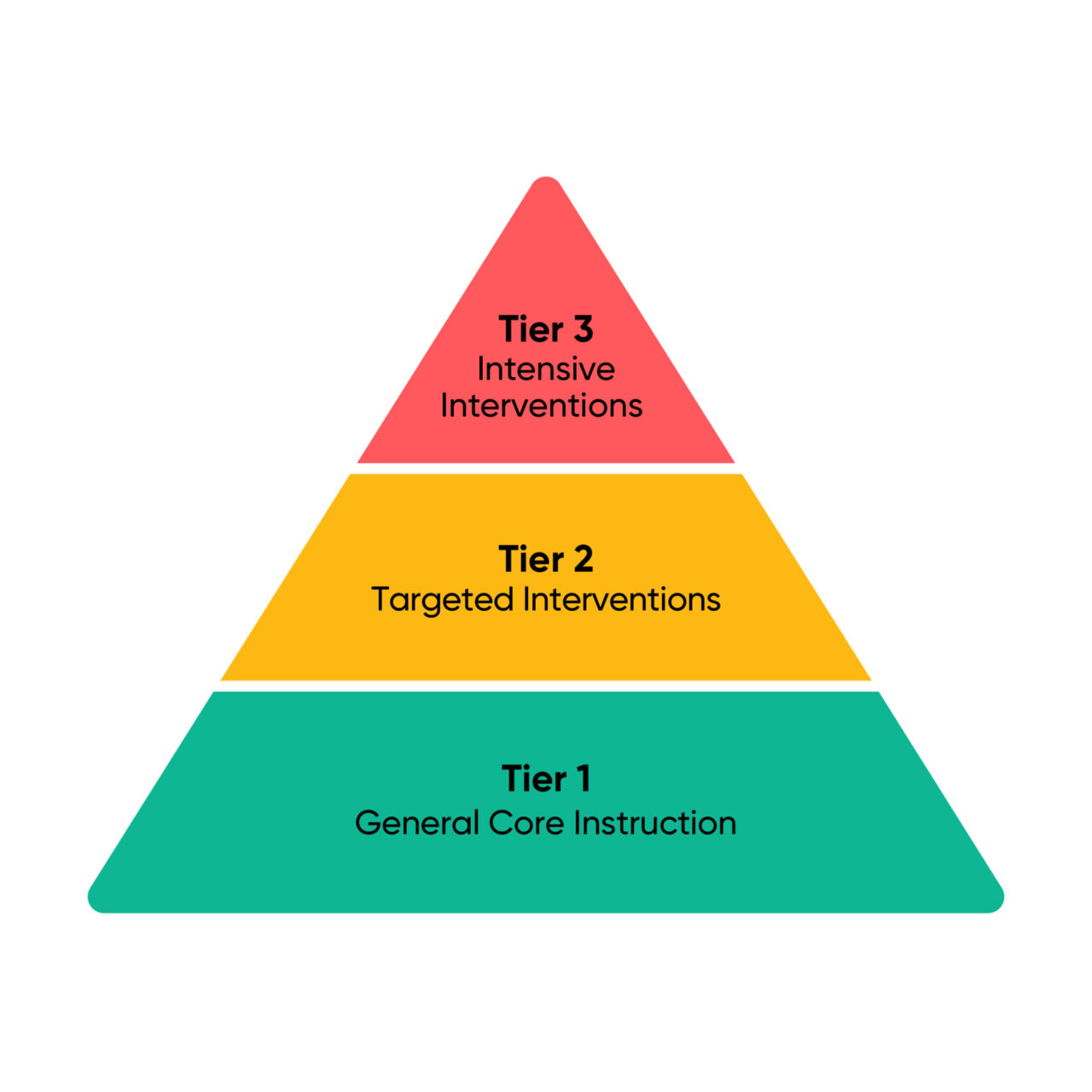
- Tier 1 consists of universal instruction and support for all students
- Tier 2 provides targeted, supplemental support for some students
- Tier 3 delivers intensive, individualized support for a small number of students
Tier 2 and Tier 3 align closely with the traditional definition of intervention: additional time, increased intensity, and a narrower focus. Tier 1 does not operate the same way. It forms the instructional and environmental baseline upon which the other tiers depend.
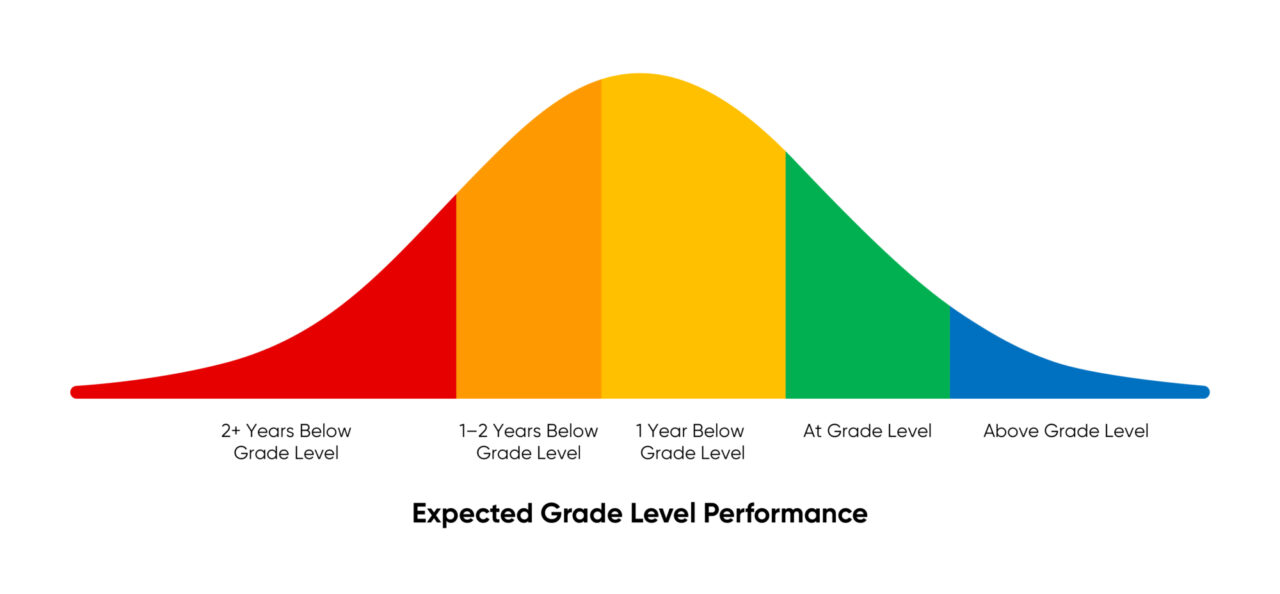
This distinction is why Tier 1 is best understood as a foundation rather than an intervention program. Visuals such as the three-tier pyramid or bell curve help reinforce this relationship, showing Tier 1 as the broad base that supports more targeted layers above it.
Tier 1 across frameworks: MTSS, RTI, and PBIS
Tier 1 is a shared concept across MTSS, RTI, and PBIS, even though each framework emphasizes different outcomes.
- MTSS integrates academic and behavioral supports within a unified system
- RTI focuses on instructional responsiveness and data-informed decision-making
- PBIS centers on schoolwide expectations and consistent behavioral supports
What these frameworks share is an implicit assumption: high-quality instruction is already occurring in a functional learning environment. The work commonly described as Tier 1 intervention often addresses gaps in that assumption, particularly in schools where learning conditions have been disrupted.
In this sense, "Tier 1 intervention" is not a component within MTSS or RTI so much as a prerequisite for those systems to function as designed.
Tier 1 intervention vs. differentiated instruction
Tier 1 intervention and differentiated instruction are related, but they serve different purposes. Tier 1 refers to the universal conditions that support learning for all students, including routines, expectations, instructional structures, and baseline instructional practices. Differentiated instruction describes how teachers adjust instruction within that Tier 1 environment to respond to student needs.
Put simply, Tier 1 establishes the foundation. Differentiated instruction happens within it.
When Tier 1 is functioning well, teachers can vary pacing, scaffolds, grouping, and supports without disrupting instruction. When Tier 1 is weak, even well-designed differentiation is harder to implement effectively.
Tier 1 intervention is not a replacement for differentiated instruction. It is the structure that allows differentiated instruction and other strategies to work before students require Tier 2 or Tier 3 support.
What does Tier 1 intervention look like?
In classrooms, Tier 1 intervention most often looks like effective teaching practice. As Withycombe noted, much of what gets labeled Tier 1 intervention is simply classroom management and the art of teaching, such as establishing routines, expectations, and structures that allow learning to happen consistently. This could include:
- Explicitly taught and reinforced routines
- Clear expectations for participation and behavior
- Instructional pacing that minimizes lost time
- Universal scaffolds that support access to grade-level tasks
These practices are more accurately described as the conditions that allow instruction to succeed, as opposed to being labeled as intervention. As Withycombe says, this work is less about implementing a Tier 1 program and more about establishing a classroom environment where learning can occur consistently.
Where do Tier 1 interventions take place?
Because Tier 1 is universal, it does not live in a single block of time or a specific setting. Instead, it is embedded throughout the school day and reflected in how instruction is planned, delivered, and supported.
Most Tier 1 interventions take place in general education classrooms during core instructional blocks. This is where teachers establish routines, expectations, and instructional practices that support all learners through strong core instruction and differentiated instruction. But Tier 1 is not limited to classroom lessons alone. Hallways, transitions, collaborative work time, and other shared spaces reinforce the same expectations and structures students experience during instruction.
This consistency is what makes Tier 1 effective. When expectations, routines, and instructional norms are predictable across contexts, students spend less time figuring out what to do and more time engaged in learning. Rather than being something teachers "add on," Tier 1 defines the day-to-day experience of school and creates the conditions that allow differentiated instruction and more targeted intervention to work as intended.
Examples of Tier 1 interventions in the classroom
When educators search for Tier 1 intervention examples, they are typically looking for instructional intervention strategies that support all students without pulling them away from core instruction. In practice, Tier 1 interventions are not isolated tactics but intentional patterns of teaching that improve access, reduce friction, and surface student needs early.
Academic supports at Tier 1
Tier 1 academic intervention focuses on strengthening core instruction, so fewer students require Tier 2 or 3 intervention later. This includes strategies that are built directly into everyday teaching and aligned with principles of differentiated instruction.
For example, explicit modeling and guided practice help ensure students understand what success looks like before working independently. Frequent checks for understanding (such as brief written responses, exit tickets, or quick oral checks) allow teachers to identify misconceptions in real time, rather than after learning gaps have widened.
Daily review and retrieval practice support long-term retention, while universal scaffolds such as sentence frames, worked examples, and visual supports make grade-level tasks more accessible. These supports are a hallmark of differentiated instruction at Tier 1, because they offer multiple entry points to the same learning goal without lowering expectations.
Behavioral supports at Tier 1
Behavioral Tier 1 supports focus on prevention rather than reaction. Instructional time is protected by explicitly teaching routines, modeling expectations, and providing consistent feedback.
Students learn what is expected during whole-group instruction, transitions, independent work, and collaborative tasks. When expectations are clear and consistently reinforced, teachers can devote more time to instruction and less time to managing disruptions.
When behavioral challenges occur, responses are predictable and instructionally focused. This consistency helps students understand expectations and reduces uncertainty, which often interferes with engagement and learning.
Social skills supports at Tier 1
Social skills instruction at Tier 1 is universal and proactive. Rather than waiting for conflicts to arise, teachers intentionally teach collaboration routines, model respectful communication, and structure partner and group work to support productive interaction.
Students may practice turn-taking, active listening, or disagreeing respectfully during academic discussions. These social supports are an essential part of Tier 1 intervention strategies because they protect instructional time and create a classroom environment where all students can participate fully.
Tier 1 intervention strategies
Effective Tier 1 intervention strategies share a common goal: increasing access to instruction while reducing ambiguity. When students understand what to do, how to do it, and why it matters, they are more likely to engage productively.
Strong Tier 1 classrooms often include:
- Clearly taught routines students can follow independently
- Instructional strategies that surface misunderstandings early
- Consistent expectations that support differentiated instruction during whole-group and small-group learning
When these elements are in place, Tier 2 and Tier 3 supports can be delivered more precisely. Teachers can distinguish between students who need targeted intervention and those who simply need stronger core instruction or more effective differentiation.
Tier 1 intervention checklist
When discussing Tier 1, Withycombe suggests thinking less in terms of programs and more in terms of reflection. A Tier 1 checklist is not meant to evaluate teacher performance or enforce compliance. Instead, it helps educators determine whether the foundational conditions for learning are firmly in place.
Below is a practical Tier 1 intervention checklist:
- Routines and expectations
- Are classroom routines explicitly taught, modeled, and practiced?
- Do students know what is expected during instruction, transitions, and independent work?
- Are expectations consistent across classrooms and shared spaces?
- Instructional access
- Can students access materials, directions, and support without unnecessary delays?
- Are universal scaffolds (such as models, visuals, or sentence frames) embedded in lessons?
- Is differentiated instruction intentionally planned within core instruction?
- Instructional time
- Is instructional time protected from avoidable interruptions?
- Are transitions efficient and predictable?
- Do classroom structures minimize lost learning time?
- Monitoring and responsiveness
- Are strategies in place to check for understanding during lessons?
- Do teachers identify misunderstandings early rather than after instruction ends?
- Are student needs clearly distinguishable before Tier 2 or Tier 3 support is considered?
If multiple items on this checklist reveal gaps, strengthening Tier 1 is often the most effective next step. Addressing these foundational elements ensures that strategies are applied appropriately and that more intensive Tier 2 and 3 supports are reserved for students who truly need them.
Clearly defining Tier 1 intervention
So, what is tier 1 intervention in education? In practice, it refers to the universal supports and conditions that make high-quality instruction effective for most students. While the term itself is used inconsistently, as Withycombe summarized, Tier 1 is "the basics. It is the foundation everything else depends on."
***
Strong Tier 1 instruction creates the conditions for learning, but some students still need more targeted support. Programs like Read 180 are designed to build on that foundation by providing research-based interventions.
Explore how HMH’s intervention solutions can support learners across tiers and help ensure every student gets what they need to succeed.
Frequently asked questions
-
1. How can schools determine whether Tier 1 instruction is effective?
Schools can evaluate Tier 1 effectiveness by reviewing student performance, behavior, attendance, and other schoolwide data. When Tier 1 is functioning as intended, most students are successful with core instruction alone, allowing more intensive supports to be reserved for students with demonstrated needs.
-
2. What should educators consider before moving a student to Tier 2 support?
Before providing Tier 2 support, educators should examine whether the student has had consistent access to high-quality Tier 1 instruction. Reviewing classroom data, instructional practices, and learning conditions can help determine whether additional intervention is needed or whether strengthening core instruction may be the more appropriate next step.
-
3. Can students who are meeting grade-level expectations still benefit from Tier 1 support?
Yes. Tier 1 is designed to support all students, regardless of performance level. Strong Tier 1 instruction provides clear expectations, engaging learning experiences, and opportunities for growth while creating a consistent foundation that benefits students across a wide range of abilities.
-
4. Why is Tier 1 considered preventive rather than remedial?
Tier 1 is considered preventive because it focuses on establishing the conditions that help students succeed before significant academic or behavioral challenges emerge. By providing strong instruction and consistent supports, Tier 1 can reduce the need for more intensive interventions later.
-
5. How does Tier 1 contribute to a Multi-Tiered System of Supports (MTSS)?
Tier 1 serves as the foundation of MTSS by providing universal instruction and supports for all students. A strong Tier 1 system helps schools identify which students need additional support while ensuring targeted interventions are built on a consistent instructional framework.
Go beyond intervention. Get our free guide on making proficiency stick.
Related Reading

Learn what is Tier 2 intervention in education, including how it relates to MTSS, special education, Tier 1 core instruction, and Tier 3 intervention

Discover the ultimate guide to MTSS and the 3 tiers of support. Find MTSS examples by tier.

Explore 11 evidence-based instructional interventions and instructional intervention examples that you can use today to help your students succeed.