



Summary
AI can support teachers by saving time and personalizing instruction, while educators remain essential in deciding how and when these tools are used in the classroom.
Key takeaways
- AI can reduce time spent on tasks such as lesson planning and provide teachers with a starting point they can adapt to meet their students’ needs.
- Teachers can use AI to personalize instruction, analyze student data, support accessibility, and strengthen communication with families.
- Starting with a clear purpose and a trusted tool can help educators build confidence using AI while protecting student privacy.
- AI should support teacher expertise, not replace it, with educators making the final decisions about how technology fits into teaching and learning.
With so much talk about artificial intelligence in the classroom, it’s understandable if you feel overwhelmed. Where do you start? Which tools will genuinely help you and your students? Should you even use AI at all?
We’ll tackle all these questions. First, let’s agree to a guiding principle. “AI is not a shortcut,” says HMH Labs EVP Andrew Goldman. “Take what it gives you and make it better. That’s how we create real value and produce what machines can’t.”
A look at the benefits of AI in the classroom
Perhaps AI’s biggest promise is that it saves time. HMH AI Tools, for instance, can help with creating lesson plans, quizzes, newsletters, and more. You might think of AI as a classroom assistant. Third-grade teacher Latonia Grant calls HMH AI Tools her “new teacher BFF.”
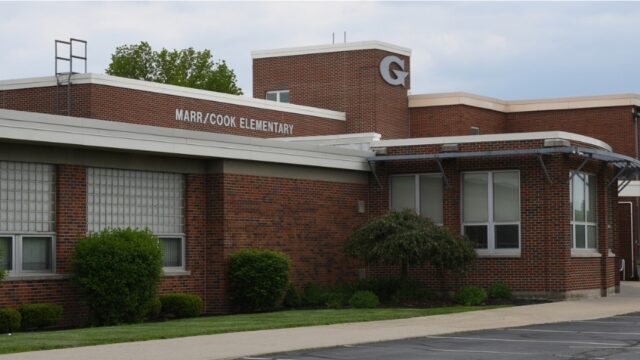
“I took our district pacing guide, popped it into the HMH AI Lesson Planner, and within minutes—minutes!—it gave me a full day-by-day plan for our unit,” says Grant, who teaches at Grovetown Elementary School in Georgia.
Instead of starting from scratch, Grant had a solid base to build each day’s lesson, saving her hours of prep time.
“I took our district pacing guide, popped it into the HMH AI Lesson Planner, and within minutes—minutes!—it gave me a full day-by-day plan for our unit.”—Latonia Grant, elementary teacher, GA
Another benefit: AI can keep students on task. Help from the teacher in a small group or one-on-one can make all the difference for students who need help grasping a concept. But what about the rest of the class? AI tools can tailor lessons to each student’s skills and interests, helping them stay focused on what they’re learning. And if they get stuck while working solo, AI can provide guidance. For those making steady progress, AI can provide feedback that keeps them moving forward.
Katherine Beals, an elementary teacher in Warren County, Kentucky and member of the HMH AI Educator Council, emphasizes that there’s one thing AI can’t do: replace teachers. “Instead, it frees up educators to spend the bulk of their time where it matters—teaching and creating alongside students.”
Beyond lesson plans: Practical examples of AI in the classroom
There are so many ways to use AI in the classroom beyond generating lesson plans and quizzes. Nicole Radosti, an elementary teacher in New York City, uses Into Reading and Writable. She appreciates how the AI in these programs supports students who need extra help while challenging advanced learners. “Too often, above-level students get overlooked, but AI can ensure they stay engaged and keep growing,” she explains.
One feature she loves in Writable: After a student finishes a writing piece, the AI creates personalized celebrations for progress, improvement, or exceptional work. “Sharing these moments with students, parents, and colleagues is a joy—and they make great bulletin board additions!”
Here are six more AI in the classroom examples you should know.
1. Personalized learning: AI can tailor learning to each student’s skills and interests. When lessons are relevant to students' lives, they’re more apt to stick with it, even in the face of challenges. Personalized learning solutions run the gamut. For instance, HMH offers adaptive practice with Waggle, oral fluency practice from Amira, and AI-supported writing practice and feedback in Writable.
2. Data analysis for instructional decisions: AI can quickly analyze large amounts of data to identify patterns, such as which standards students need more support with, and then suggest appropriate instruction. But as with most tools, it’s “garbage in, garbage out.” If you’re feeding unreliable data into your AI tools and pulling lessons from unproven materials, your results won’t lead to effective instruction. HMH Performance Suite, which has shown to increase proficiency in recent research, relies on proven assessments like MAP Growth and evidence-based, high-quality instructional materials from HMH curriculums for next steps teachers can count on.
3. Virtual labs and simulations: AI can power virtual science experiments or simulations, giving students hands-on experiences even when resources are limited. In a virtual science experiment, for instance, students mix chemicals, observe reactions, and analyzing results—no lab needed. Physics simulations allow students to adjust variables like force or velocity and instantly see how outcomes change. These tools make abstract ideas concrete for students while saving teachers planning time and eliminating safety concerns.
4. Help with writing IEPs: AI can write an initial draft of an IEP with recommendations for accommodations and interventions. As with any use of AI for special education, it’s important to remember that AI is a helper, not a replacement for teacher expertise. Educators should always review and personalize AI-generated recommendations to fit each student’s needs, follow district policies, and protect privacy. It’s especially important not to input sensitive information into just any AI tool. HMH AI Tools follow a Zero Data Retention policy. Student information stays safe because the AI does not store or reuse any data outside our secure HMH platform, and no data is used to train OpenAI.
5. Speech-to-text for accessibility: Speech-to-text tools help students with motor challenges or dysgraphia complete the same written assignments as classmates. This way, teachers can meet diverse needs without having to create separate assignments. The tools also allow teachers to focus on helping students organize and develop their ideas, rather than focusing on mechanics only.
6. Help with translation: AI can translate emails, newsletters, or report card comments into languages including Spanish, Vietnamese, or Russian, making communication with caregivers easier. These translations aren’t going to be perfect; they could miss meaning or sound awkward. Keep messages short and simple, and always review before sending.
How to use AI in the classroom
When it comes to incorporating AI into the classroom routines, the best strategy is to start small. Begin with a clear purpose and a single tool. This will help you build confidence without becoming overwhelmed. Keep the following steps in mind.
- Start with a purpose: Decide why you want to use AI: to save time, personalize learning, or increase engagement. This way, you can choose the right tools to support classroom goals.
- Choose trusted tools: Select AI tools from reputable education providers that prioritize student privacy and align with curriculum goals. Reliable tools make AI use safer, smoother, and more effective.
- Know what AI can do: Try out the tool. Does it give feedback? Create content? Analyze student progress? When you know its strengths, it’s easier to use the tool in ways that truly help you.
- Set clear limits: AI should assist teachers, not replace their personal judgement. Use it for repetitive tasks or enrichment, but the key decisions are your own.
Should artificial intelligence be used in classrooms?
AI is on the rise in classrooms across the country. Its use has surged sixfold in the last year according to our latest Educator Confidence Report, and many digital learning tools, especially in math and reading, have run on AI for years.
“Too often, above-level students get overlooked, but AI can ensure they stay engaged and keep growing.”—Nicole Radosti, elementary teacher, NY
Still, many teachers worry that students could become too dependent on AI or use it to cheat. Nearly 80% say students need ethical training. To address these concerns, states are moving quickly on AI literacy. According to the Education Commission of the States, 28 states have already released K–12 AI guidance, with more on the way.
Teachers have valid concerns, but they also cite the benefits of AI in the classroom: 85% of those who use AI say it saves them up to five hours a week, which they can devote to students.
For those who use AI, the challenge is choosing tools that truly support teaching and learning. HMH has put together a primer that can help educators cut through the noise. We make the case for AI tools that:
- Integrate with high-quality, standards-aligned curriculum and assessments
- Personalize learning for every student using real-time data on their needs
- Save teachers time by helping with everything from lesson planning to text translation to writing emails
- Safeguard student privacy and security above all else
“The future of AI in education isn’t about how many tools you have,” says HMH CEO Jack Lynch. “It’s about how well they work together to serve the teacher-student relationship.”
The future of classroom AI is in teachers’ hands
The way we’re using AI in the classroom is a work in progress, so teachers have the chance to define what comes next.
“It’s about teachers making the call—where AI fits, how it helps, and when it falls short,” writes Lynch in a Fast Company article. “But one thing is clear: Teachers are not letting technology define the future of education. They’re shaping it themselves.”
***
Get monthly education news updates and thought leader insights delivered straight to your inbox. Sign up for our Shaped newsletter.
HMH AI Tools are designed to teach with you, not for you.