








Icebreakers for math teachers
There are many times you may need to break the ice in a classroom. It can be during the first day when students are just meeting each other or it can be later in the year if you want to start a new part of the math curriculum with a fun, interactive lesson. We have curated math icebreaker activities from across our blog, Shaped, to help introduce students to math concepts and have a good time while doing it.
Elementary math icebreakers
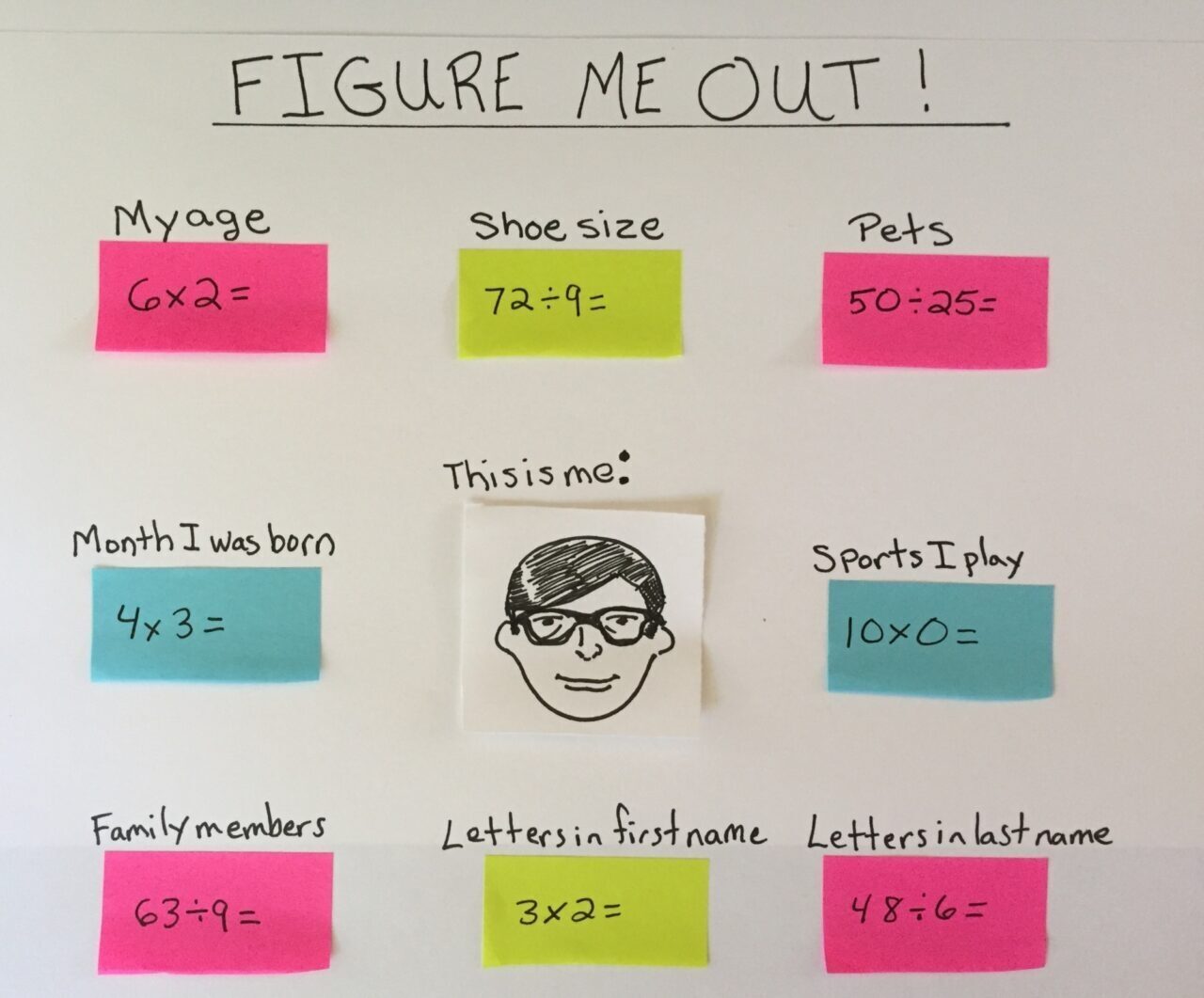
1. Figure me out (Grades 2–5)
Challenge students to create equations that represent various numerical facts about themselves. For instance, a child named Brian could write the equation 35/7=____ or 3+2=____ for the number of letters in his first name. Let’s say Brian is 10 years old. He might write the equation 100/10=____ as the clue to his age.
Classmates can solve the equations and use the clues to figure out whose stats are shown. This back-to-school icebreaker activity for elementary students will help your class get to know one another while providing you with valuable insights into their math skills.
2. Interest survey (Grades 2–5)
This icebreaker activity helps students learn about one another by asking questions and sharing about themselves, while learning about collecting and analyzing data. Here’s how it works:
- Brainstorm survey questions: Students might think of questions about interests, hobbies, or favorites that classmates can answer quickly. For example, “What’s your favorite subject?” or “Which do you like more: playing outside or playing inside?”
- Select one question to focus on: Students choose one question and finalize 2–5 consistent answer choices that classmates can easily respond to. For example, for the question “What’s your favorite subject?” students might choose between math, English, social studies, and science.
- Collect the data: Students circulate the room to ask their question and record responses using tally marks or another visual organizer.
- Graph the results: Students create a bar or picture graph to represent their data, labeling categories clearly and ensuring each response is included.
- Analyze and discuss the data: Students consider questions such as: Which category has the most or fewest responses? How many more students chose one option over another? What observations do you have about your survey data? What do you wonder?
- Share findings: Students discuss their results with the class, explaining what they noticed and what they learned about their classmates.
3. Diagram your class (Grade 5)
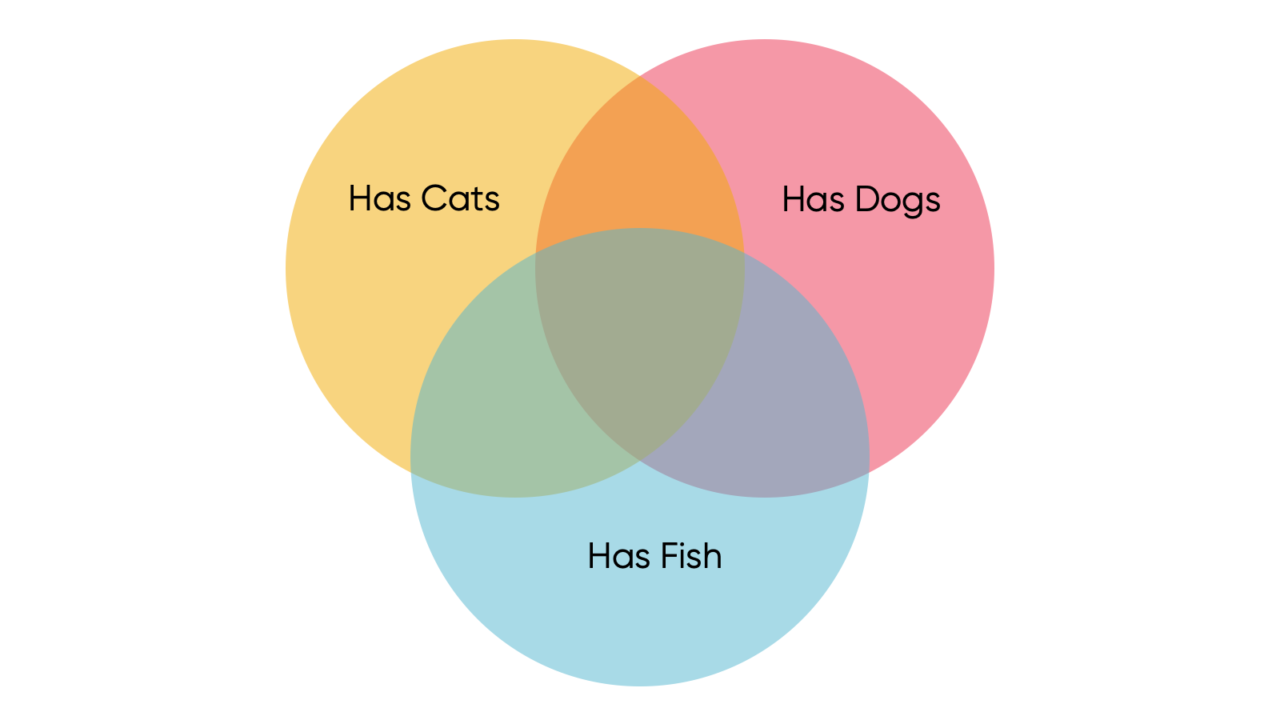
The Venn diagram is more than a math tool. It’s a way of organizing ideas that span every subject. This 5th grade math activity is a engaging lesson that uses Venn diagrams to spark student conversation.
- Choose three categories that your students would be interested in identifying with, for example “Has Dogs,” “Has Cats,” and “Has Fish.” You can change these to any three categories your students would like. They don’t need to be related for this activity to work, but if they are, it promotes richer discussion.
- Use our free downloadable or publicly display a Venn diagram of the categories that the students can interact with.
- Students identify where they fall within the Venn diagram. You can use a digital platform or have students write their name on a sticky note and place it in the spot that represents them.
- Facilitate a discussion around what you and your students observe. For example, “About what percent of the class has cats?” “What conclusions can be drawn from the data?” “What fraction of pet owners have dogs?”
Middle school math icebreakers
4. Museum exhibit (Grades 4–6)
Many students have been to a museum, but have they ever considered creating one? Give this lesson, taken from our blog full of Memorial Day math activities, a try and let your students have some fun working in groups as they showcase their creativity.
Tell students they get to run a history museum completely out of their imagination. First, have them invent the museum. Encourage creative names and illustrations!
- Name of Museum (example: Jose’s Museum of Iraq)
- Location of Museum (example: Miami, Florida)
Now suppose their museum is planning a special exhibit for an upcoming holiday. What objects would they like to display for the exhibit? Have them think about the different kinds of objects that can tell a story and draw a crowd. Would their museum have art in its collection? Photographs? Letters?
- What objects will the museum feature for this exhibit?
- What is your budget for the exhibit? (example: $1 million)
Finally, have students plan how to get their budget back. This requires not just calculating how many tickets they have to sell but also thinking about questions like how to get people to come in the first place. Encourage students to use mathematical language in their explanations.
- How much would you charge per ticket?
- How many tickets would you need to sell to get your money back?
- How will you attract people to come to your exhibit?
You can pair this with other museum-related activities available on our blog, such as these free virtual field trips or activities on teaching math using the Metropolitan Museum of Art.
5. Design a parade float (Grades 5–9)
Find additional inspiration from our Memorial Day activities and get out those markers, crayons, and pencils for this lesson! Your community is holding a holiday parade, and they don’t just want you in it—they want you to design a float for it.
Have students draw their float. It may help to show them pictures of other parade floats so they have an idea of what typically goes on them. Will they need costumes? A sound system? Balloons? When they’re finished drawing their float, have them measure it, too. How wide is it? How tall is it?
Now students should calculate the cost of building the float. Have them think about every material listed and estimate how much of each material they would need. For example:
- Amount of wood?
- Amount of metal?
- Amount of wire and papier-mâché?
- Speakers and generator?
Have students research the cost of each material online and calculate the total cost based on quantity. How much money would they need to ask the school for in order to build the float?
To extend the activity, tell students to imagine that the principal says, “If you can reduce the costs by 10%, I’ll give you the money to buy everything.” How would they reduce the costs by 10%? Feel free to modify the question by having the principal instead list a different requirement, such as to “divide the costs in half” or “reduce the costs by 90%.”
High school math icebreaker games & activities
6. Number facts pass (Grades 9–12)
Begin this high school icebreaker by modeling it: State your name, and then name a number and one of its features—for example, “49” followed by “perfect square.” Have each student introduces themselves and share a different number that shares the feature (for example, 64). The next student must think of a different feature for that number (for example, even number), and the next student must name a different number with that feature (for example, 12). Continue passing from student to student until everyone has named both a number and a feature; they should also be introducing themselves when it’s their turn to speak.
Depending on students’ skill levels, consider requiring that every number be a fraction, decimal, expression, or imaginary number. Students can randomly choose the next classmate who must name either a number or a fact about a number. Or you can place everyone’s name on a list and randomly generate names, one at a time.
7. Create a new symbol for pi (Grades 9–12)
Language is woven throughout mathematics, connecting symbols, words, and meanings. For example, pi is represented by the Greek letter “\(\pi\),” which comes from the first letter of the Greek word for periphery (i.e., the periphery, or perimeter, of a circle). This activity, adapted from our blog on Pi Day activities for high school students, encourages students to take a closer look at the language of math.
- Discuss briefly the meaning of pi in a way appropriate to the students you teach.
- Have students think-pair-share what features of pi are important. Possible answers include: it relates the diameter of a circle to its circumference, it represents an irrational number, it’s often approximated using a decimal or fraction, it shows up in formulas for area and volume.
- Have students invent a new symbol for pi, then explain why their new symbol is better using mathematical language.
- Invite students to show their symbols to the class and explain how it represents the meaning of pi.
For additional ideas on mathematical language, explore our blog on math language routines.
Math icebreaker games & activities for all grades
8. Which one doesn’t belong? (All Grades)
In this discussion-based activity, students analyze a set of numbers to determine which one does not belong, then justify their reasoning. What makes this activity so fun is that there is no single correct answer. Each option can be defended using mathematical reasoning. For example, let’s consider the numbers: 3, 33, 46, and 53.
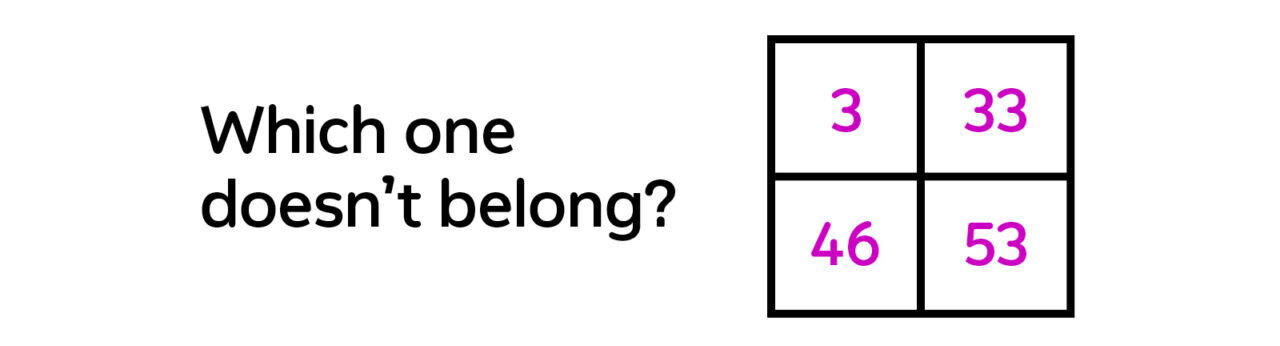
- 3 is the only one-digit number.
- 33 is the only number with two numerals that are the same.
- 46 is the only even number or the only number without the numeral 3.
- 53 is the only number whose first digit is greater than the second digit.
Students should explain their thinking using mathematical language. Consider asking questions such as: What do you notice? How are the numbers similar or different? Which one does not belong, and how can you justify your choice?
Since there are many different approaches students can take, it creates an opportunity for math talk, where they can build on or challenge one another’s ideas. This can be used as a small-group math activity and be adapted to fit any grade level.
9. Play a card or board game (All Grades)
Who said learning math couldn’t be fun? Icebreakers for math teachers can come from sources outside of math education. While there are plenty of games that have been designed with math learning in mind, so many games can become math icebreakers in the hands of a determined teacher. From our post of summer math activities, choose any game you already enjoy playing that includes points, money, or strategic thinking—which gives you an awful lot of options! Look for ways to layer math talk on top of the game:
- What strategy did you use?
- How would your score change if you had made this move instead?
- What types of game decisions take the most time to decide on?
10. Math at Work: Exploring math in real-world careers (All Grades)
Students often ask when they will use math outside of the classroom. Exploring different careers can help make those connections more visible. As a way to energize your students and give them some math to talk about, take a few minutes to play an engaging math video or try out a lesson or activity from our Math at Work series, which focuses specifically on how math applies to real-world careers, such as art, business, fashion and more. For example, in theater, students learn how production teams rely on math for budgeting, designing sets and props, and calculating lighting angles. In sports, they explore how athletes and coaches use math for analyzing performance, managing nutrition, and setting goals.
Take this a step further and challenge your students to think about their own interests and what careers they want to learn more about. What math skills or concepts might be most important in this career? What kind of problems do professionals in that field solve using math?
More ideas for math icebreaker games?
Got ideas for fun first-day-of-school math icebreakers? We’d love to hear your ideas! Share them at Shaped@hmhco.com or follow us on Instagram, LinkedIn, and YouTube.
***
Find more ideas to teach multiplication with HMH Into Math, a core mathematics curriculum for grades K–8 that inspires students to see the value and purpose of math in their daily lives through rewarding, real-life activities and lessons.
This blog, originally published in 2022, has been updated for 2026.
Download our FREE Substitute Teacher Activities pack