





Math has always mattered, but right now, the stakes feel especially high. Student math achievement is at historic lows. Not just compared to where we want to be, but compared to where we were just a few years ago. And while test scores often grab headlines, what’s underneath them matters even more: students losing confidence, narrowing life pathways, and too many young people deciding early on that math simply isn't for them.
Last fall, we released a whitepaper on math instruction and policy as a way to step back and ask a hard question: What conditions actually need to be in place for math teaching and learning to improve, at scale?
While there is no single fix or answer, there are clear signals about what helps math education and what gets in the way.
In math, when materials don’t work coherently, students are the ones left trying to make sense of it all.
SVP, Policy & Government Affairs, HMH
The research points to three policy challenges that consistently show up in math systems.
1. Disconnected adoption and procurement policies: In many states and districts, core curricula, supplemental tools, and intervention programs are selected separately, via different timelines and through different processes. The result is predictable: materials that weren’t designed to work together, competing instructional approaches, and classrooms where coherence is the exception, not the norm.
In all subjects, but particularly in math, when materials don’t work coherently, students are the ones left trying to make sense of it all.
Policy can help by encouraging adoption processes that review materials together, prioritize coherence, and support alignment across core, supplemental, and intervention resources.
2. Professional learning that pulls teachers away from practice: Math professional learning often defaults to stand-alone workshops or broad, content-only training. Well-intentioned, but frequently disconnected from what teachers are actually teaching the next day.
Teachers need time and support to deepen both math content knowledge and instructional practice. Curriculum-based professional learning does exactly that. It’s job-embedded, grounded in real lessons, and far more likely to improve what happens in classrooms.
With limited time and capacity in mind, policy should prioritize professional learning models that strengthen instruction–not add another layer of fragmentation.
3. Lack of clear guidance for AI use in math instruction: As we all know, AI is already in classrooms–but more and more often without a plan.
In the absence of clear policy guidance, adoption is happening tool by tool, classroom by classroom. That creates a risk of fragmented learning experiences, erosion of instructional coherence, and uncertainty around privacy and appropriate use.
State leaders have an opportunity to set clearer expectations that AI tools align with high-quality instructional materials, reinforce mathematical reasoning, and support teacher judgment rather than replace it. Thoughtful guardrails now stand to prevent much bigger problems later!
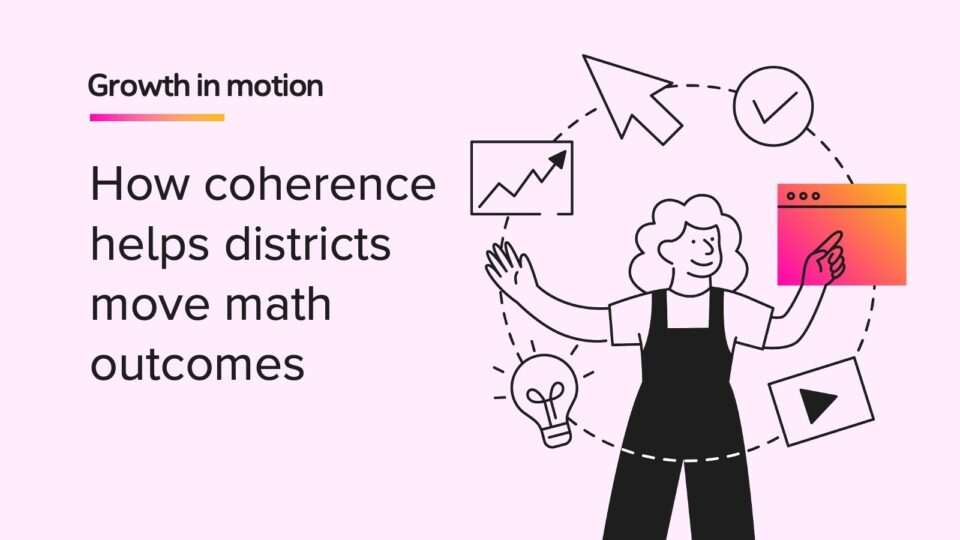
In short, none of these challenges are about lack of effort or commitment. They’re about systems that weren’t designed with coherence in mind. But when policy aligns materials, professional learning, and technology around a shared instructional vision, teachers become better supported and students will be far more likely to see math as something they can do.
***
HMH’s core math solution Into Math for Grades K–Algebra 1 includes language routines, real-world connections, and more that deepen students’ mathematical understanding.
Teach the fun of math with five hands-on activities that spark curiosity in your students.